

By Eddah Waithaka
Huawei has connected 170 million people living in remote and underserved communities across more than 80 countries, surpassing its 2022 pledge to the International Telecommunication Union (ITU) Partner2Connect (P2C) Digital Coalition.
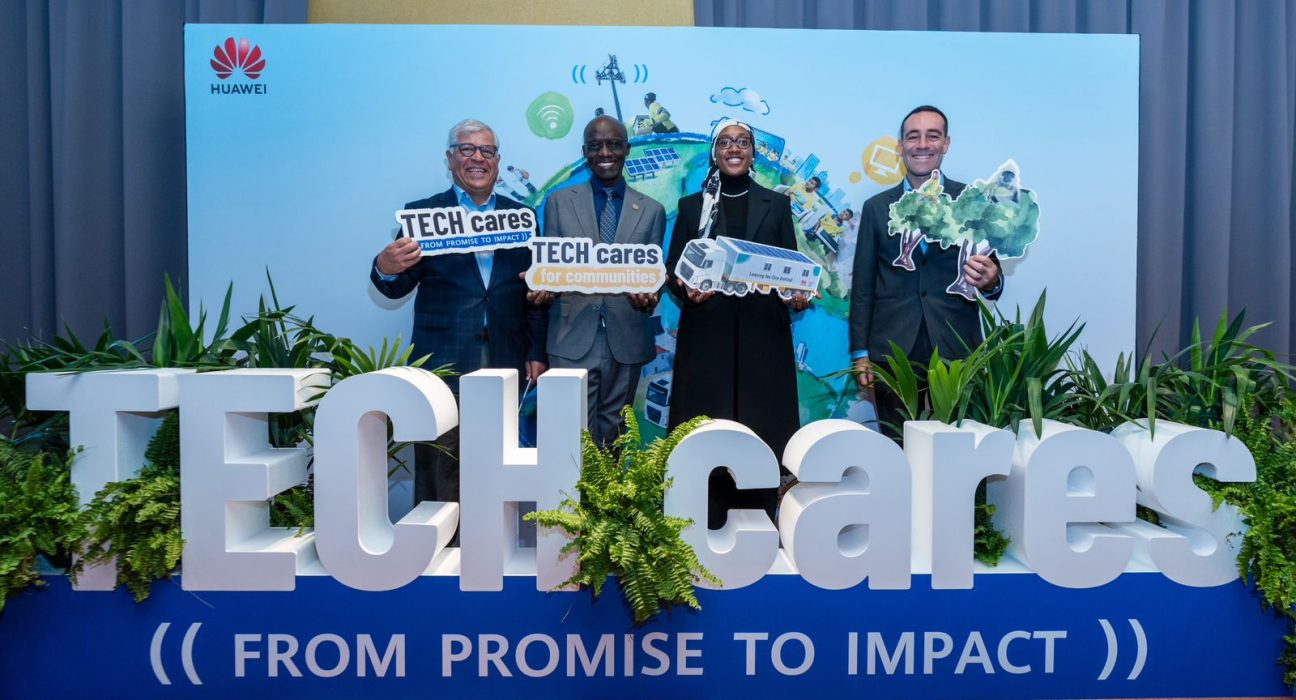
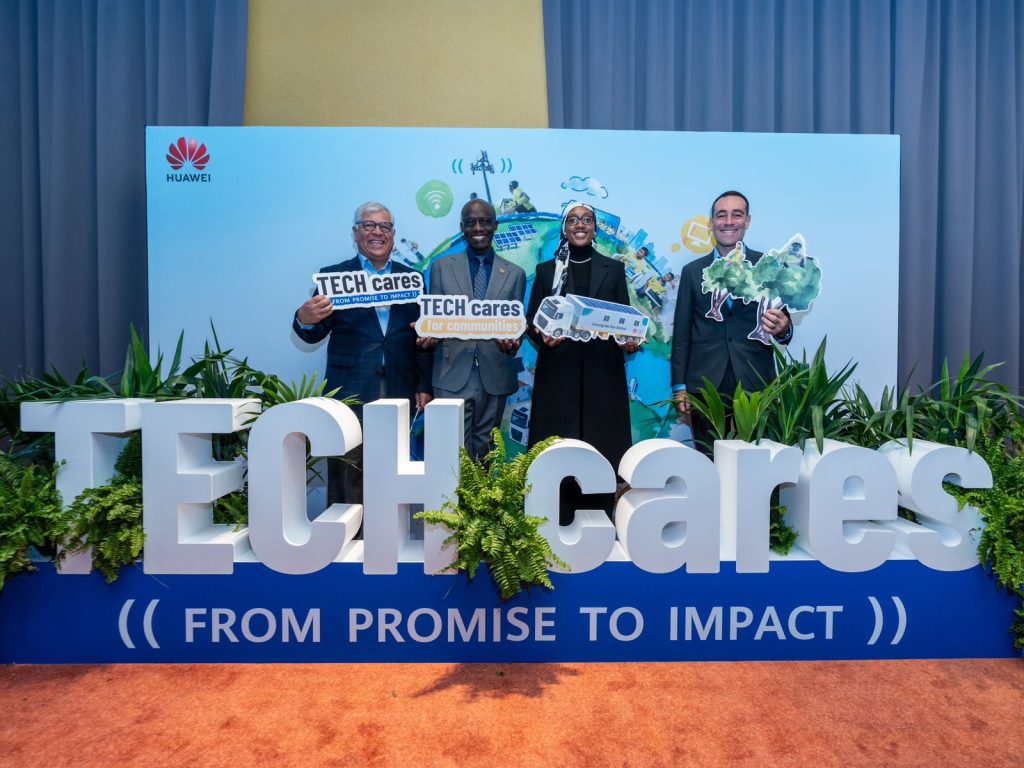
Yang Chaobin, CEO of Huawei ICT Business Group, announced the milestone during the company’s TECH Cares Forum in Barcelona today.
The achievement exceeds Huawei’s original commitment when joining the coalition in 2022: to connect 120 million people in remote areas by 2025.
Yang attributed the success to close collaboration with telecom operators and partners worldwide.”This progress reflects the power of partnership and our shared commitment to ensuring that digital technology benefits everyone,” he said.
The forum brought together approximately 80 participants from governments, industry, international organizations and partner institutions to examine the growing urgency of digital inclusion in the age of artificial intelligence.
Discussions focused on practical pathways to close the digital divide and the need for sustained, multi-stakeholder collaboration.
In his opening remarks, Yang pointed out that despite rapid AI advancements, the digital divide persists and risks widening further.”High-speed digital networks and robust computing capabilities are essential foundations for an inclusive and sustainable AI era,” he said.
The fulfillment of the ITU P2C pledge, he added, reflects Huawei’s ongoing commitment to innovation, bringing remote communities improved access to healthcare, education and financial services through digital connectivity.
Cosmas Zavazava, Director of the ITU Telecommunication Development Bureau, commended Huawei’s contribution to universal connectivity.
“Connecting rural and underserved communities requires innovative business models, inclusivity, effective use of communication resources, community engagement, and sustained investment in local capacity,” he said.
“I applaud Huawei’s commitment to meaningful connectivity and value our strong and successful partnership.”Jeff Wang, President of Huawei Public Affairs and Communications, emphasized that digital inclusion depends on two mutually reinforcing pillars: inclusive connectivity and digital skills empowerment.
To address the skills gap, Huawei works with governments and institutions to support students, youth, women and older populations through initiatives that expand access, deliver digital skills training and strengthen STEM education.
Since 2019, Huawei’s Skills on Wheels programme has provided mobile digital training to over 130,000 people in 21 countries, creating new pathways to employment and entrepreneurship in underserved regions.
Marina Madale, Executive of Sustainability and Shared Value at MTN Group, reinforced the role of connectivity as foundational infrastructure for Africa’s growth.
She highlighted MTN’s focus on expanding rural coverage, improving device affordability and building digital- and AI-ready skills across the continent.
Huawei’s progress has benefited from continued innovation in rural network solutions. Since 2017, the company has upgraded its Rural Series technologies to improve affordability and deployment efficiency.
In November 2025, Huawei launched RuralCow, a solution designed to extend coverage to villages of approximately 1,500 residents, including deployments in partnership with MTN Nigeria.
These solutions have contributed directly to the milestone of connecting 170 million people while stimulating local economies and improving access to digital public services.
Delivering a keynote address, Philip Thigo, Kenya’s Special Envoy for Technology to the United Nations, described the current moment as a transition from the Information Age to the Age of Intelligence, where intelligence itself has become a factor of production.
“Without deliberate action, the digital divide risks becoming an existential divide,” Thigo said, calling for universal access to intelligence to be recognized as a new generation of rights.
He outlined Kenya’s Digital Economy Agenda, focused on inclusive growth through expanded fibre and satellite networks, 25,000 public Wi-Fi hotspots and Digital Hubs in every ward.
“Connectivity must translate into livelihoods. It must be accessible, meaningful, and beneficial where people live, learn, and flourish,” he said.
Moving beyond access alone, Thigo underscored the importance of Digital Public Infrastructure for Intelligence, enabling trusted access to compute, shared datasets, AI sandboxes and governance frameworks.
“Without it, we risk becoming consumers of other people’s intelligence. With it, we begin to build our own.”He stressed that there is no leapfrogging in the AI economy, calling for coordinated investment across energy, connectivity, compute, data, talent, governance, financing and partnerships.
“If we want our youth not just to use AI, but to build with it, we must invest deliberately across the entire stack.”
Thigo cited Huawei’s DigiTruck, part of the Skills on Wheels initiative, as a practical example of last-mile skills delivery. In Kenya, the solar-powered mobile classroom has trained over 10,000 youth across 40 counties.
“Bringing opportunity to the last mile ensures that geography does not determine destiny. Inclusion must be a design choice,” Thigo concluded.
Forum participants agreed that advancing digital inclusion in the AI era requires sustained, collective action from governments, operators, international organizations and enterprises.
Looking forward, Huawei reaffirmed its commitment to rural network innovation, open collaboration and digital skills empowerment, continuing to contribute to a more equitable and sustainable digital future worldwide.