


By Eddah Waithaka
They constitute 70 to 80 percent of Kenya’s agricultural labor force, yet women receive less than 10 percent of agricultural credit and hold only one-third of formal wage employment in the sector.
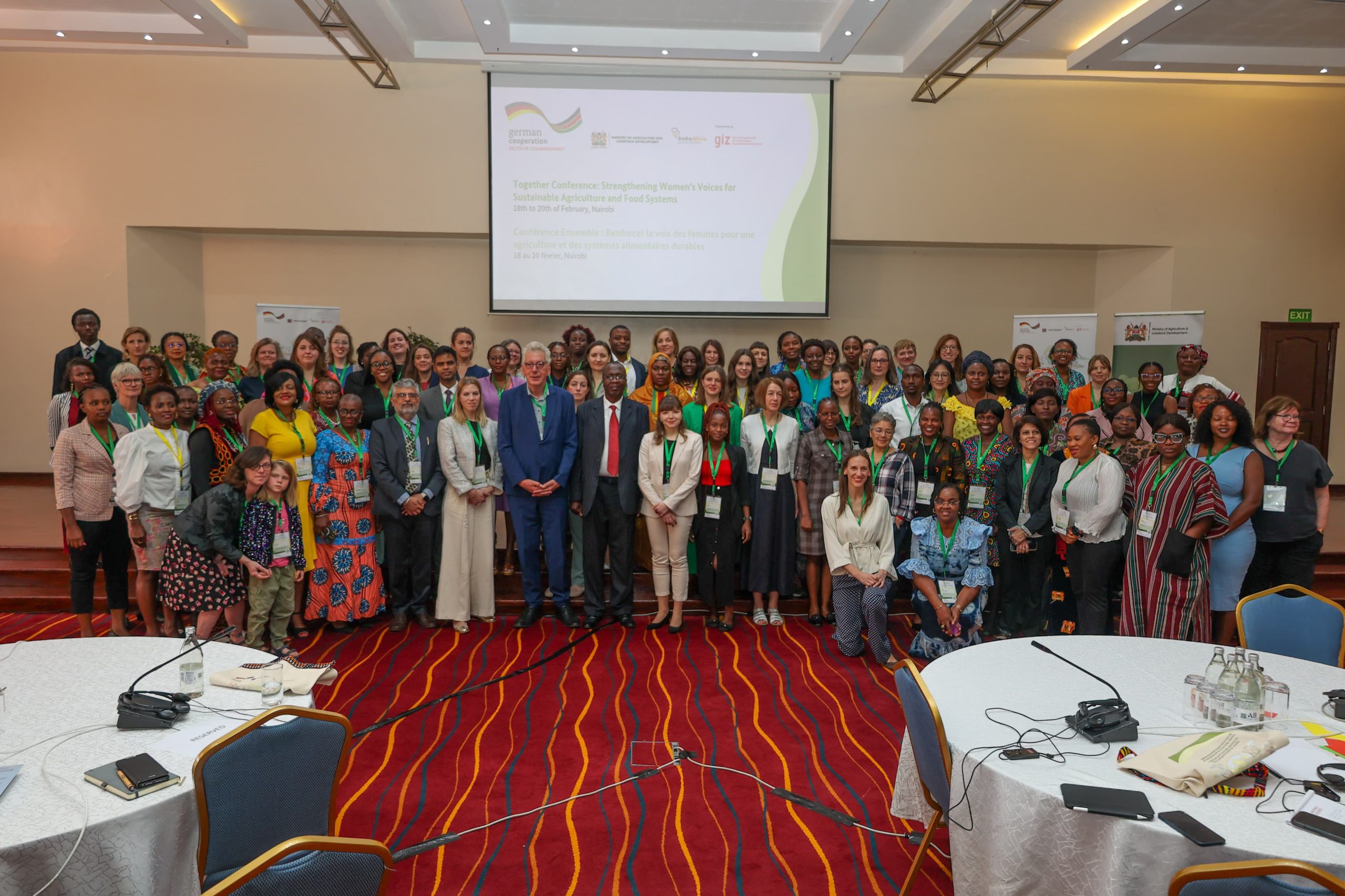
These stark statistics took center stage as stakeholders from academia, research institutions, media, and civil society convened to mark International Women’s Week 2026, issuing a powerful call for policy reforms and investments to address systemic barriers limiting women’s participation and productivity in Kenya’s agricultural economy.
Held under the theme “Women Cultivating Opportunity,” the high-level forum brought together leading experts and practitioners to examine challenges facing women farmers and explore solutions for strengthening their economic empowerment.
Opening the forum, Zubeida Kananu, President of the Kenya Editors Guild, moved attendees with a personal reflection on her mother—whose daily labor supported both family and community despite facing barriers to land ownership, credit, and modern agricultural technologies.
“My late mother loved feeding people,” Kananu shared. “Through her small kibanda she supported farmers, educated her children, and nourished a community. Her story reminds us that behind every thriving food system are women quietly feeding a nation.”
Women Drive Agriculture but Face Structural Barriers
Delivering the keynote presentation, Prof. Mary Mbithi, Team Leader at the University of Nairobi WEE Hub and Professor of Economics, presented sobering data on the disconnect between women’s contributions and their access to resources.
Women account for 70–80 percent of the agricultural labor force yet represent only 33 percent of formal wage employment in the sector. Most strikingly, women receive less than 10 percent of agricultural credit, despite working longer hours on farms and in households.
Prof. Mbithi identified structural barriers including limited land ownership rights, restrictive cultural norms, and limited access to finance as primary obstacles hindering women’s full economic participation.
“Addressing these barriers is not just a gender issue; it is an economic imperative,” she emphasized. “Closing the gender gap in agriculture can significantly improve productivity, food security, and household incomes.”
She called for policies that strengthen women’s land and inheritance rights, expand access to affordable finance, and support women-led enterprises across agricultural value chains.
Land Rights and Legal Awareness
Panelists delved deeper into the specific legal hurdles women face in securing land ownership, a fundamental asset for agricultural productivity.
Tracy Lichuma, Legal Counsel and Land Programs Officer at FIDA Kenya, exposed troubling implementation gaps in succession and matrimonial property laws that continue to disenfranchise women.
“When the owner of the land dies, the in-laws might intermeddle removing the widow from the succession,” Lichuma revealed, highlighting a all-too-common reality for many Kenyan widows who lose their homes and livelihoods despite legal protections.
She called for urgent action to bridge the gap between progressive laws and their implementation on the ground.
“There should be awareness of how to access the digital system when filing land cases or registering land ownership,” Lichuma emphasized. “Legal awareness is not only for older women but also for the younger women between ages 18 and 35.”
Her remarks underscored that technology, while promising, remains inaccessible to many without targeted education and outreach, particularly for young women seeking to claim their land rights.
Education and Policy Reform Critical
Dr. Lucy Wakiaga, Associate Research Scientist at the African Population and Health Research Center, underscored the role of education and policy reform in addressing gender inequality.
She pointed to persistent disparities in education particularly in STEM fields, that limit women’s opportunities to adopt new agricultural technologies and participate in higher-value segments of the agricultural economy.
“Educational inequality directly affects women’s productivity and leadership in agriculture,” Dr. Wakiaga said. “If we want inclusive economic growth, we must invest in gender-responsive education systems and remove the cultural stereotypes that discourage girls from pursuing science and technology.”
Recognizing the Invisible Burden
Panel discussions examined the disproportionate burden of unpaid care and domestic work carried by women, which limits their ability to participate fully in economic activities.
Chris Ojiewo, Lead Researcher at ICRAF (World Agroforestry), delivered a powerful call for systemic investments to address this hidden tax on women’s time and labor.
“We need to invest in social infrastructure, including childcare services and labor-saving technologies, to reduce the time women spend on unpaid domestic work and enable them to engage more actively in income-generating activities,” Ojiewo stated.
He urged stakeholders to scale technologies and innovations that respond directly to the needs of women farmers, emphasizing that solutions must reach beyond pilot projects to achieve meaningful impact.
“We need innovative approaches including youth- and women-led quality centers that connect farmers to markets, strengthen quality standards, and create opportunities along agricultural value chains,” Ojiewo added, pointing to models that simultaneously address market access, quality control, and youth employment.
Partnerships and Inclusive Approaches
Speakers called for stronger partnerships among governments, research institutions, development partners, and the private sector to scale technologies and innovations that respond to the needs of women farmers.
The forum highlighted the importance of including men and youth in women’s empowerment initiatives to ensure sustainable progress within households and communities.
The event concluded with a unified call for policy reforms, increased investment in women farmers, and stronger data collection to guide evidence-based decision-making.
Participants agreed that placing women at the center of agricultural development is essential to achieving inclusive economic growth, strengthening food systems, and building resilient rural economies.
“Empowering women farmers is one of the most powerful investments we can make in Kenya’s future,” speakers emphasized.