

By Eddah Waithaka
The Matatu Owners Association (MOA) today declared an indefinite nationwide strike, shutting down all public service vehicles starting Monday.
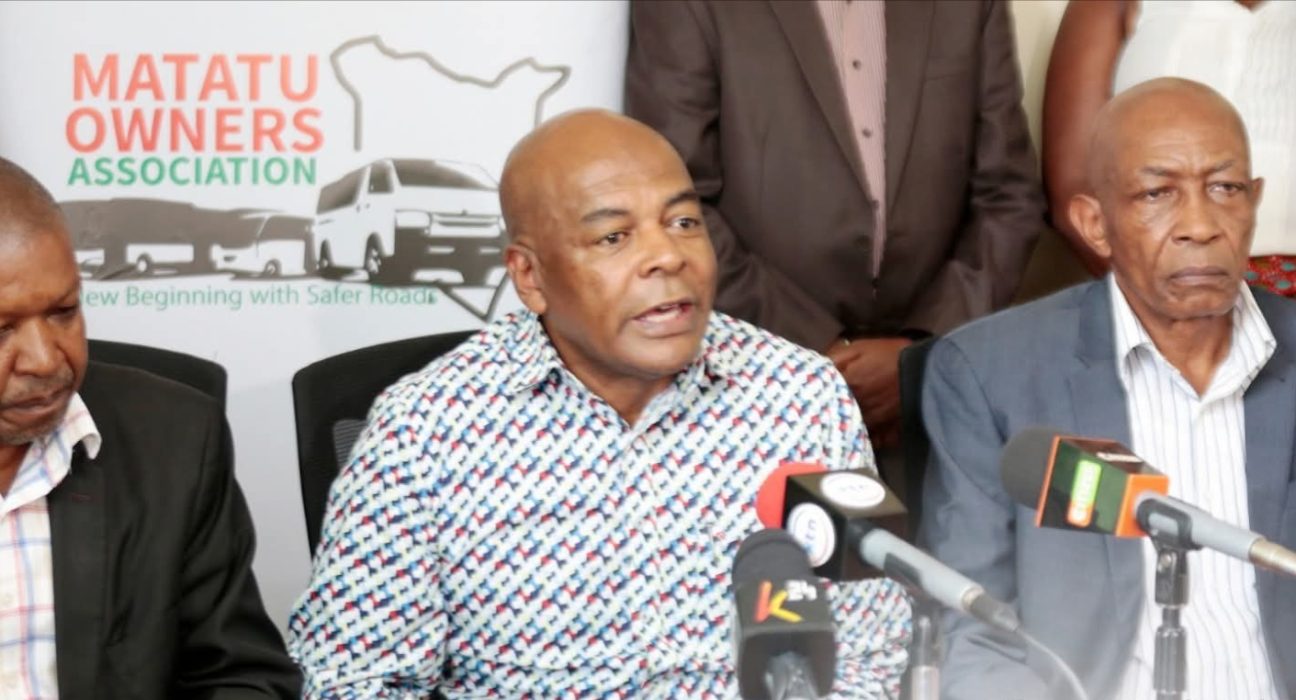
The association issued the ultimatum alongside allied transport bodies during an urgent press briefing in Nairobi, decrying government inaction over a surge in vigilante-style arson attacks on vehicles.
MOA President Albert Karagacha led the announcement, stating the sector will withdraw all vehicles from roads indefinitely until President William Ruto directly addresses their security concerns.
“From Monday, there are no vehicles which are going to be on the road until we are heard,” stated Karagacha. “The only person we are going to listen to now is the president because these other people have failed. The police have failed, NTSA has failed, and the Transport Minister has failed.”
A Crisis Ignited
The transport bodies cited a relentless and alarming wave of incidents where mobs, often operating as “judge, jury, and executioner,” torch vehicles including matatus, buses, trucks, and private cars over traffic disputes.
They listed recent attacks on operators like Mashpoa in Sagana, Super Metro, and a private Honda vehicle, calling the trend “uncontrollable.”
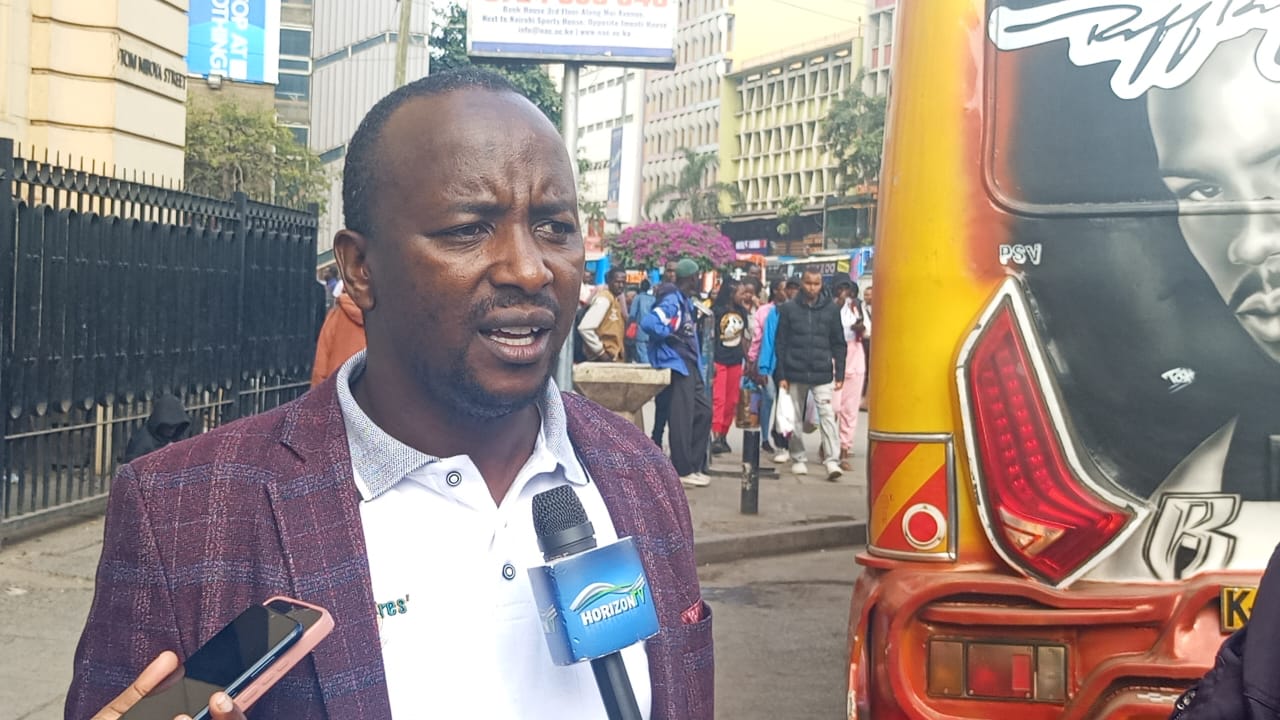
Joseph Kagai, Chairman of the Intercorridor Mobility Association, emphasized the nationwide scale of the protest. “From Monday, we will make sure all major towns, cities, and roundabouts in the country see no passing until the government addresses this. We have not seen any arrests. We have not seen any reports.”
Investors Ruined, Insurers Silent
Speakers painted a dire picture of the consequences. They stated that investors lose millions, insurance companies deny claims for burnt vehicles, and drivers face trauma and depression.
“Many of our members are in hospital under depression,” said one representative. “Their families have been broken because the insurers are not paying us. This is something so worrying that must not continue.”
A Return to “Kamjesh” Era?
Frustration boiled over into stark warnings. Kagai referenced the infamous “Kamjesh” vigilante groups of the past, suggesting operators may reclaim their own security if the state abdicates its role.
“If the government is not protecting us anymore, anywhere a rider stops and starts stoning a vehicle, all vehicles on the road will be stopping there and dealing with them then and there,” Kagai warned.
Solidarity Across the Sector
The briefing showcased rare unity across Kenya’s fragmented transport industry. The Motorist Association of Kenya, online taxi representatives, bus and truck owners, and large matatu Saccos stood together, vowing to paralyze road transport.
They framed the strike not as an act of defiance but as a desperate demand for a fundamental right.
“Security is a basic need,” concluded a final speaker. “We are not sympathizing to get secured, we are demanding it. If the government cannot deliver security, we don’t know its importance.”
The transport sector now waits for a response from State House, with the country bracing for severe disruption come Monday morning.