

By Eddah Waithaka
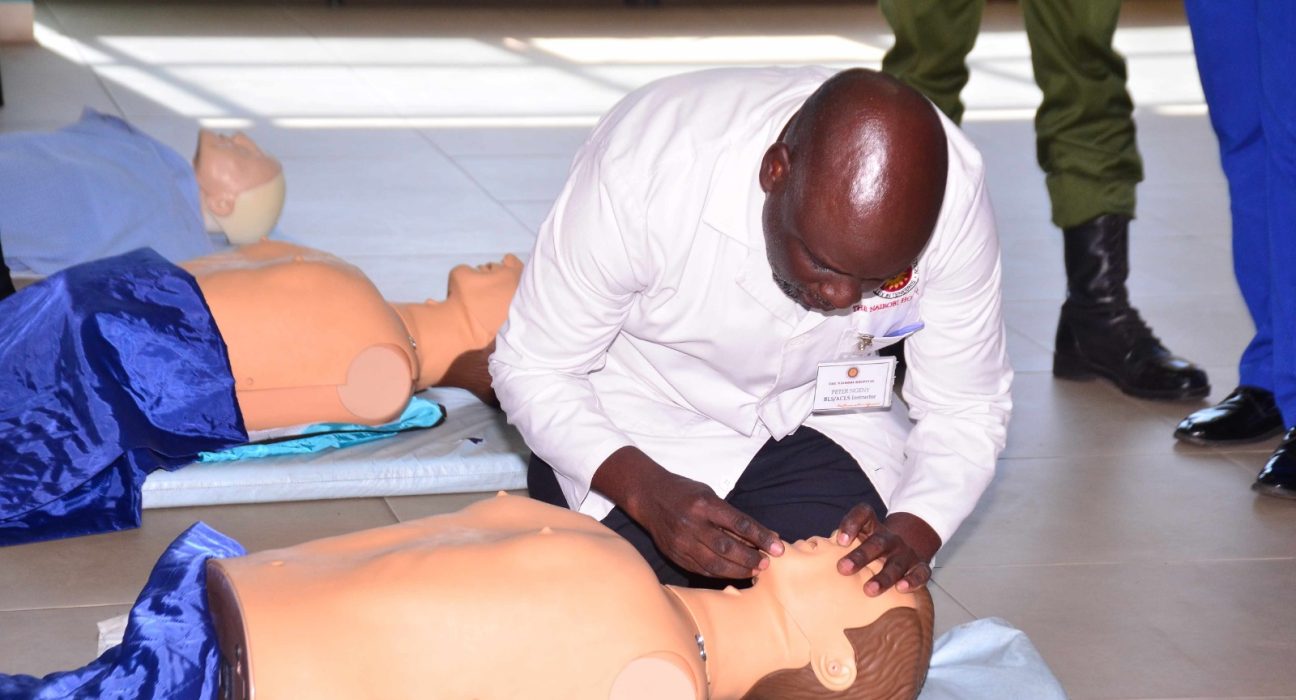
In a major boost to Kenya’s emergency response capabilities, The Nairobi Hospital has successfully trained and certified more than 50 police officers and oversight officials in crucial Basic Life Support (BLS) techniques.
The day-long training, conducted in partnership with the Cicely McDonnell College of Health Sciences, brought together officers from the Administration Police, Kenya Prisons Service, and the Independent Policing Oversight Authority (IPOA).
The initiative arms these first responders with the skills to act decisively at accident scenes, directly addressing a critical gap in the country’s emergency ecosystem.
This program forms a key part of The Nairobi Hospital’s year-long 70th-anniversary celebrations. It targets a stark reality: recent studies reveal that first aid is provided in less than 16% of workplace and road traffic injuries in Kenya.
“This training is a crucial primary step in providing effective and rapid interventions during injuries,” said The Nairobi Hospital CEO Felix Osano.
“Having the necessary skills and knowledge increases the chances of survival for accident victims. Through such structured programs, we will succeed in improving the knowledge and skills in first aid provision immediately after accidents.”
Mr. Osano emphasized that immediate intervention by a bystander can mean the difference between life and death.
Medical experts confirm that prompt First Aid and Cardiopulmonary Resuscitation (CPR) can double or even triple survival rates from out-of-hospital cardiac arrests and traumatic injuries.
Expert personnel from the Cicely McDonnell College of Health Sciences, Kenya’s first privately owned nursing school, which is also celebrating its 70th anniversary this year, conducted the intensive sessions.
Commandant of Security of Government Buildings and VVIPs, Mr. Lazarus Opicho, who participated in the training, highlighted its practical importance for officers on the ground.
He noted that BLS skills are vital for identifying and categorizing injuries on the spot.“Knowledge of Basic Life Support is particularly important in cases of mild bodily harm because it makes primary categorization of injuries possible before victims arrive at health facilities for advanced examination,” said Mr. Opicho.
“I am proud to have been a part of this initiative to educate and train our officers in these life-saving interventions,” the program underscores.
The Nairobi Hospital’s strategic evolution into a holistic healthcare leader, extending its impact beyond hospital walls through education and community safety.
By forging this vital link between healthcare professionals and law enforcement, the initiative creates a stronger safety net for citizens across multiple economic sectors.
As part of its 70th-anniversary commitment, The Nairobi Hospital plans to continue offering these targeted safety training sessions to priority groups across the country throughout the year.