


By Eddah Waithaka
Founder Wawira Njiru sets sights on one million daily meals by 2027 as local vendors and women farmers drive the organisation’s rapid scale
Wawira Njiru started small. Twenty-five children. A few sacks of maize and beans. Coins rattling in a payment box. Her mother’s Nissan Caravan hauling supplies from Githurai.
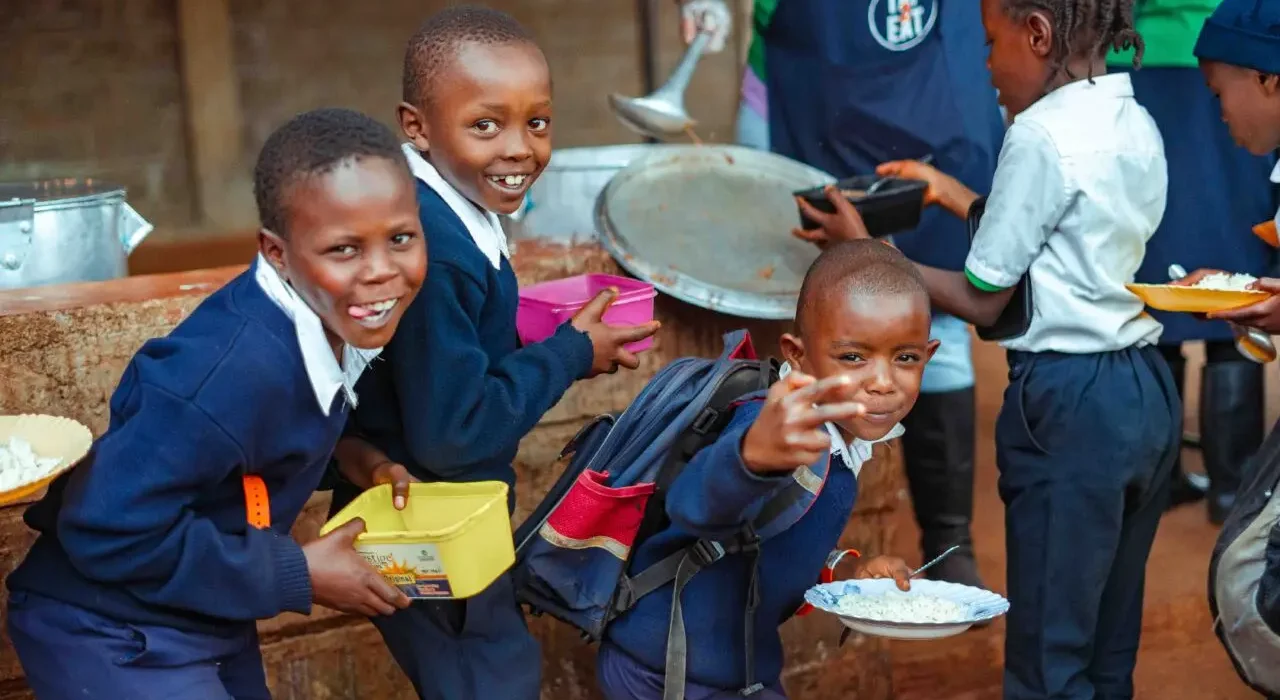
Today, Food4Education serves its 200 millionth meal. The not-for-profit social enterprise announced the milestone during a capacity-building workshop that brought together more than 300 food and non-food vendors across Kenya.
The event, held at the Kenya Institute of Special Education (KISE), also kicked off days before World Hunger Day on May 28, whose 2026 theme, “The End of Hunger is in Our Hands,” champions community-led solutions to malnutrition.
“School feeding is one of the most powerful investments any nation can make,” Njiru, Food4Education’s Founder and CEO, told the gathered vendors. “When done well, it builds healthier children, stronger learners, more resilient communities, and fosters growing local economies. That is the opportunity in front of us, and it is one we can act on every single school day.”
635,000 meals today. One million tomorrow.
Njiru revealed the organisation’s staggering current scale, “Today, 635,000 meals will be cooked and served to children across Kenya, and that would not be possible without our suppliers and partners.”
Next year, she added, “We are looking at feeding one million children every single day. That will require dedication and commitment from everyone in this ecosystem.”
The numbers behind the ambition already impress. Over the past 15 months, Food4Education delivered 20,874 tonnes of food ingredients and 10.8 million fruits. Approximately 80 per cent of its food comes from local smallholder farmers.
Women farmers take centre stage
Roughly 50 per cent of the farmers supplying the programme through local aggregators are women. The organisation sources vegetables locally through aggregators in more than 20 counties, creating a circular food system where farming households earn income that then supports their own communities, while the same locally produced food feeds children attending nearby public schools.
“One of the strengths of Food4Education is that we source many of our supplies from the same communities where we serve meals,” Njiru said. “That means school feeding is not only improving nutrition and learning outcomes, but also creating economic opportunities for local farmers, traders, transporters, and businesses.”
From 18 tonnes to 4,320 tonnes, local vendors grow with the programme
The economic ripple effects run deep. One eco-briquette supplier, now Food4Education’s primary fuel source, scaled from delivering 18 tonnes to 4,320 tonnes, helping power the organisation’s clean cooking network. A cabbage vendor expanded from supplying 0.5 tonnes to 350 tonnes annually.
In the second half of 2025 alone, Food4Education procured 703 metric tonnes of cabbages, 221 metric tonnes of carrots, and more than 2.1 million bananas.
The Jua Kali sector also thrives. Peter Njuguna, an artisan who manufactures the steel containers used in Food4Education kitchens, shared his journey since 2018.
“I started by supplying just 80 containers, but as Food4Education expanded, my business grew with it,” Njuguna said. “Today, I have produced more than 3,000 containers, trained 20 people, created jobs for 25 workers over the years, and even built my own home proof that as F4E grows, local suppliers grow too.”
From coins and a caravan to trucks serving 180 kitchens
Njiru reflected on the organisation’s humble beginnings in Ruiru, with help from her mother.
“When I started Food4Education in 2012 with just 25 children, we used to pay suppliers in coins because that is how children paid for meals then,” she recalled. “We have come a long way from buying a few sacks of maize and beans in Githurai and loading them into my mother’s Nissan Caravan, to today, where trucks supply more than 180 kitchens across the country.”
“That journey reflects the power of partnership, consistency, and a shared belief in our mission.”
As Food4Education powers toward its 2027 goal of one million daily meals, the message from the KISE workshop rang clear: the end of hunger may indeed rest in community hands and in Kenya, those hands are already cooking, farming, manufacturing, and delivering.