

By Eddah Waithaka
The International Centre of Insect Physiology and Ecology (icipe) celebrated a full year of its Vision and Strategy 2026–2030 on 17 November 2026, hosting its annual Science Day under the theme “Insect Science in Action: From Vision to Impact.” The event brought together scientists, policymakers, partners, and donors to showcase how the Centre translates insect research into practical solutions for food security, health, and climate resilience across Africa.
Dr Ylva Hillbur, Chair of the icipe Governing Council, welcomed attendees and outlined the strategy’s three core pillars: research excellence, impact delivery, and capacity development. She noted that these pillars have strengthened icipe’s position as a globally leading centre of excellence in insect science over the past year.
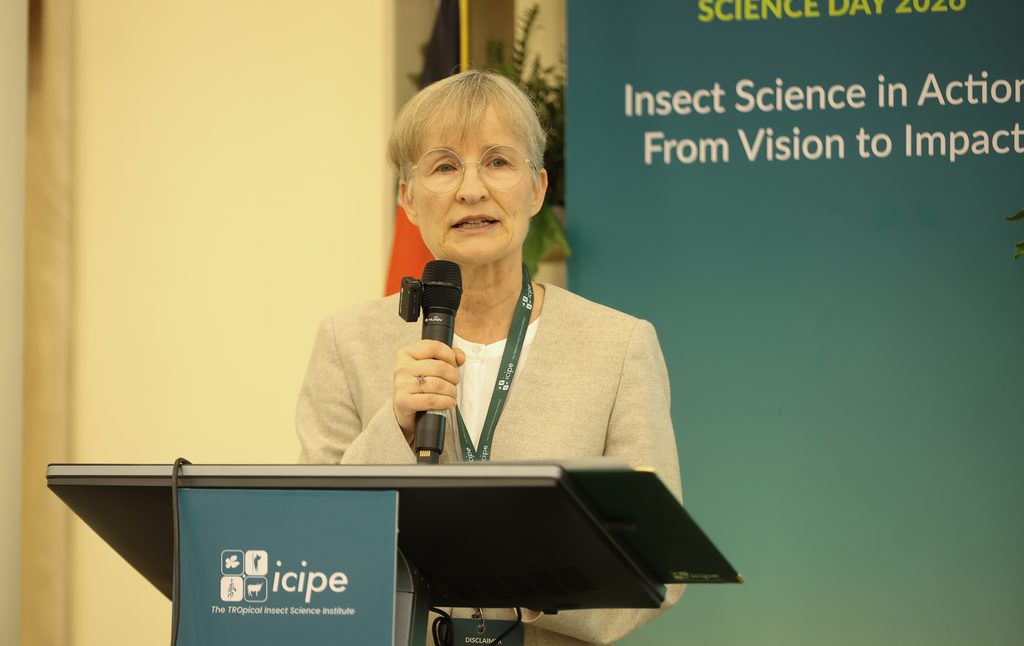
“Our research addresses pressing continental needs from food security and vector-borne diseases to climate resilience across five domains: agrifood systems, global health, environment and biodiversity, climate change, and policy,” Dr Hillbur said. “These domains are reflected in all research, innovations, and solutions emerging from icipe.”
Dr Hillbur emphasized that sustained commitment, strategic investment, strong partnerships, and collective ownership have driven the Centre’s growth. She also highlighted icipe’s strong programs for PhD and MSc students, which strengthen research capacity for the future across many countries on the continent.
“As we continue working towards our 2030 ambition, we recognize that our partners and donors have been central to our work enabling us to advance the frontiers of insect science, expand our reach, and amplify our impact,” she said.
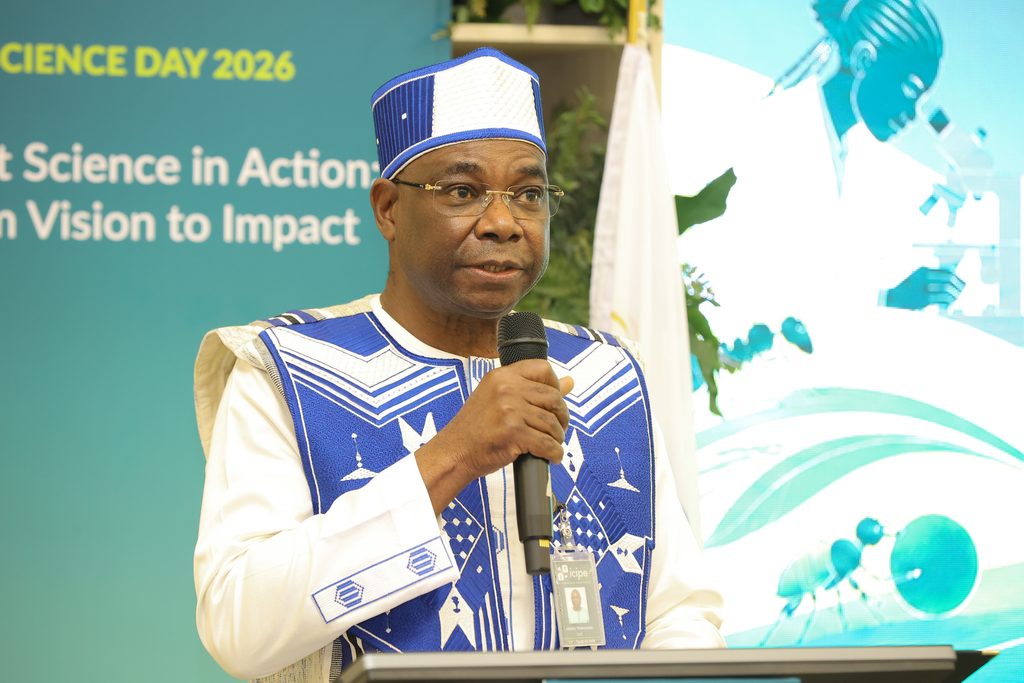
Dr Abdou Tenkouano, Director General of icipe, praised staff as the first champions of the Vision and Strategy and detailed several notable achievements from the past year. He emphasized that the Centre is translating its strategic ambitions into action through scientific excellence, deploying insect science solutions, developing stronger partnerships, and expanding its African and global footprint.
In human health, Dr Tenkouano highlighted icipe’s research on Microsporidia MB, a microbe that can infect mosquitoes and block malaria transmission. “icipe’s research is turning research into practical, scalable solutions for blocking malaria transmission,” he said.
In plant health, he noted icipe’s participation in the Red Palm Weevil Control project, which focuses on controlling invasive pests destroying date and other palm trees in the Middle East and Northern Africa. The Centre is developing nature-based solutions such as biopesticides and using “farmer friends” or beneficial insects to kill weevils.
In Sub-Saharan Africa, Nagana, a serious livestock disease spread through the bite of infected tsetse flies, threatens animal health, livestock productivity, and farmer and pastoralist livelihoods. Dr Tenkouano highlighted icipe’s innovations, including the tsetse repellent collar designed to be worn by animals and traps that use various colors, shapes, and odours to attract tsetse and other flies away from the animals. These proven innovations are being advanced for uptake in West and Central Africa.
MaYEA Project Transforms Livelihoods in Ethiopia
Dr Tenkouano also pointed to the MaYEA project in Ethiopia, which combines beekeeping with crop production and tree planting to restore land and improve livelihoods. “It has helped farmers improve the productivity of their land and put over 300,000 youth in work since 2023,” he said.
The Director General noted that 15 icipe scientists were recognized in the 2025 edition of the World’s Top 2% Scientists ranking in October 2026, a testament to the scientific talent and expertise within the Centre.
“We have deepened relationships with our long-standing donors and partners and established new strategic ones,” Dr Tenkouano said. “These have been central to our new programmes, which will significantly scale our innovations, expand our regional footprint, and bring our research closer to farmers and communities that need them most.”
He also noted that icipe launched a quarterly online forum to connect its promising innovations for controlling pests and diseases with agricultural businesses, creating a new pathway for industry engagement, technology uptake, and the wider application of research.
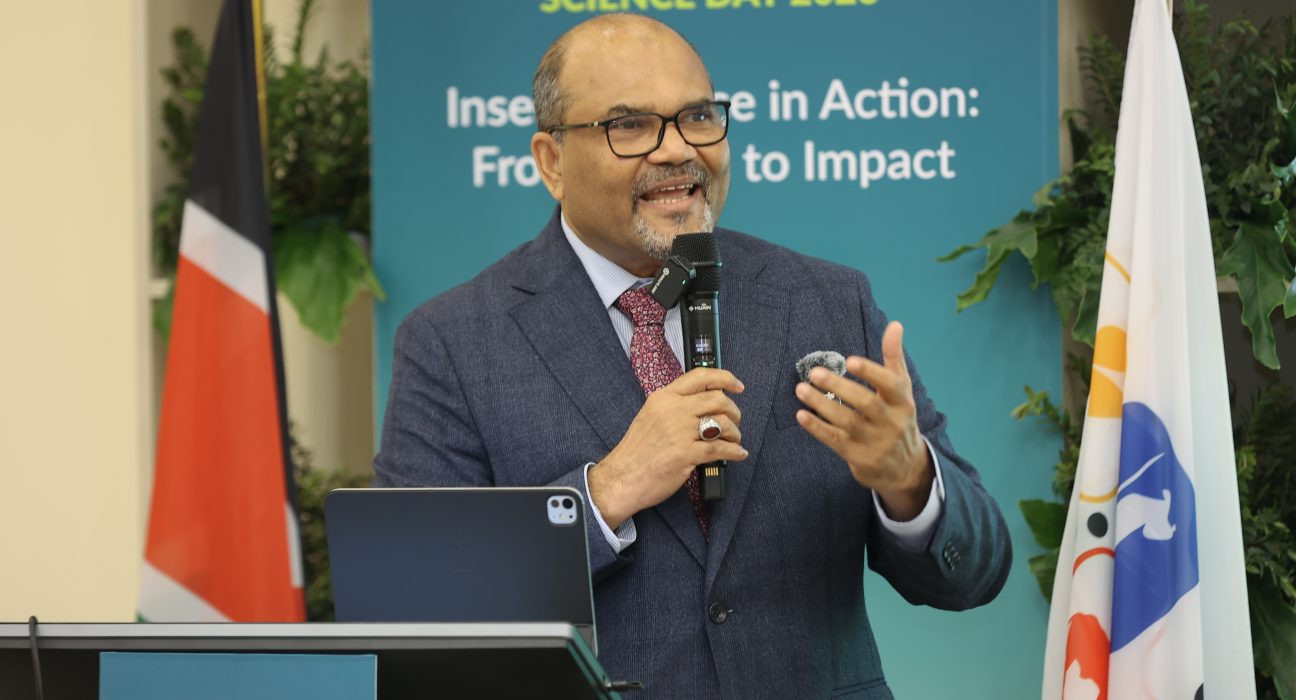
Prof. Shaukat Abdulrazak, Principal Secretary for Kenya’s State Department for Science, Research and Innovation, delivered the keynote address and urged scientists to move innovations from the lab to the market.
“Only scientific research will bring Africa to a position where it can control its destiny,” Prof. Abdulrazak said. “Scientific research is not merely about generating knowledge. It is about building capacity of our nations to determine their own economic, technological, developmental futures.”
He noted that up to 40% of global crop production is lost annually to plant pests and diseases, with Kenya experiencing 30% to 40% pre- and post-harvest losses. “It is through science that we can manage these losses, which bring almost more than $220 billion in terms of losses,” he said.
Prof. Abdulrazak emphasised the importance of entomology, plant health research, and sustainable pest management. He praised icipe’s work in using insects to produce manure and animal feed, calling these “very clear testimonies of how science can have impact in our society.”
“We must, as we move forward, deploy science to anticipate emerging pest outbreaks, develop climate-resilient agriculture practices, conserve beneficial insects, strengthen biodiversity, and improve the entire ecosystem,” he said.
Breaking Silos, Building Partnerships
The Principal Secretary called for multidisciplinary, multi-institutional, and transdisciplinary approaches to break silos in research. “Agriculture cannot be separated from biodiversity,” he said. “We must be able to have philosophers, social scientists working with biological scientists, so that we can get the findings out into society and demonstrate the impact.”
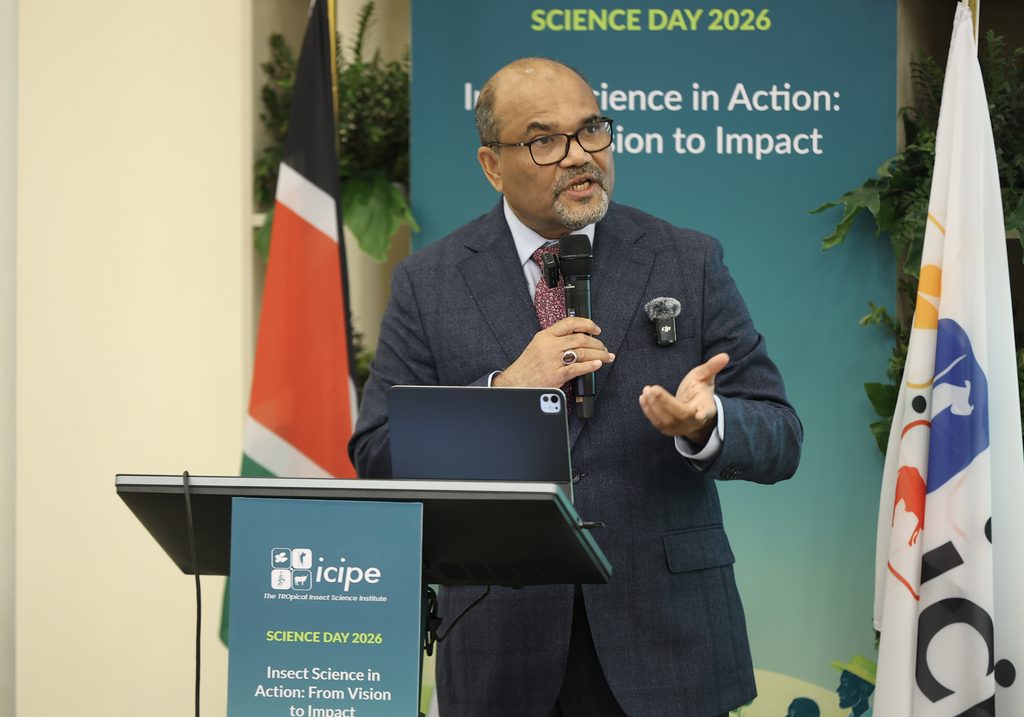
He noted that Kenya prioritizes productivity, value addition, enterprise development, employment creation, and improved livelihoods under the Bottom-Up Economic Transformative Agenda. “Science, research, and innovation must therefore be embedded in these priorities,” he said.
Prof. Abdulrazak also highlighted the Kenya Grand Challenge, launched with the Gates Foundation and Science for Africa Foundation, as a new avenue for strengthening researchers and centres of excellence. He expressed hope that icipe would secure funding through the initiative.
“We must entice the private sector so that they can also come and invest,” he said. “As a country, we are doing almost 0.8% of the GDP, and we want to move it to 1% of the GDP. We need to look at research towards innovation and commercialization.”
He challenged icipe to increase the commercialization of its products in Kenya, noting that he had seen some products in Zanzibar and Tanzania but very little in Kenya. “Next time I come here, I would like to see more of the commercialization of the products that we have,” he said.
Prof. Abdulrazak emphasised the importance of training the next generation of scientists. “I always talk about youth being the co-pilots. They’re not leaders of tomorrow. They’re leaders of today. We must be able to mentor them,” he said.
He noted that emerging technologies such as artificial intelligence, machine learning, robotics, biotech, and genomics present new opportunities for leapfrogging development. “Today, the entire world is in your hand. So it’s going to be a different ballgame,” he said.
“It is not enough friends and colleagues just to publish. It is not enough just to have innovation. This innovation must be able to have impact,” Prof. Abdulrazak said, repeating the phrase “from the lab to the market” three times for emphasis.
The event featured an Impact Exhibition, where attendees interacted with icipe staff and explored the Centre’s science up close. Dr Hillbur noted that the exhibition provided an opportunity to see how icipe’s research contributes to meaningful change.
Dr Tenkouano reaffirmed icipe’s commitment to strengthening partnerships and expanding its African and global footprint as it works toward its 2030 ambition.
“To all our icipe colleagues, here and across the continent, I thank you for your dedication, your ideas, and the passion you bring to our work every day,” he said. “To our partners and donors, thank you for your trust, your support, and your continued belief in what we can achieve together.”
As icipe looks towards 2030, Dr Tenkouano said the Centre’s ambition is clear: “To strengthen icipe’s position as a leading centre of excellence, ensuring that our research and innovations contribute meaningfully to positive development impacts across Africa and even beyond.”