

By Eddah Waithaka
Kenya must move beyond counting health facility deliveries and confront the quality and continuity of care that determines whether mothers and babies survive, experts said at the Editors’ Forum on maternal, newborn, and child health at the Serena Hotel in Nairobi.
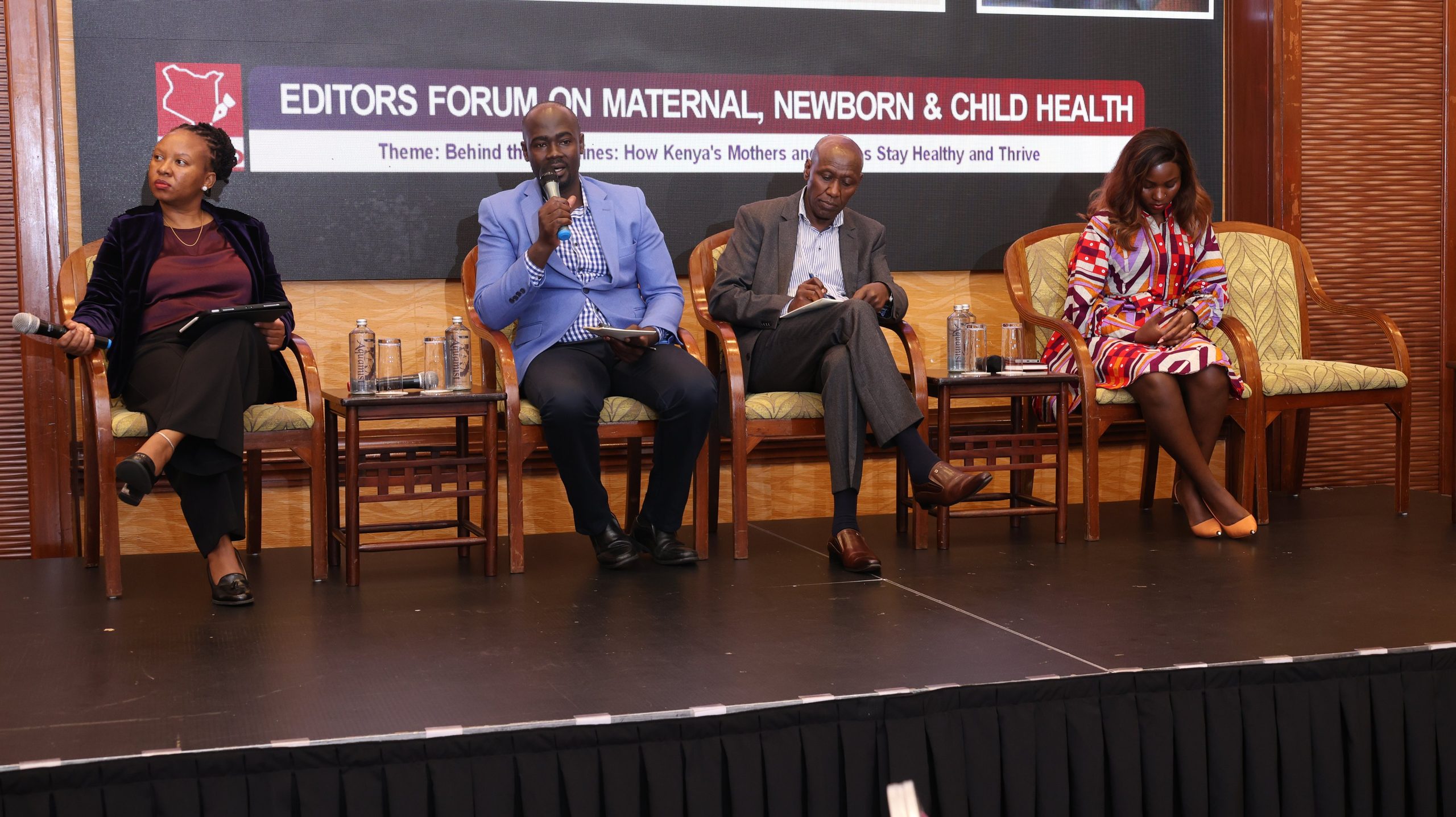
Dorice Amondi of the Ministry of Health’s newborn and child health section set the tone, noting that more women now deliver in health facilities yet deaths persist.
“It is not enough to just have access to the facility. The quality and continuity of care are very important,” she said.
Prof. William Macharia, Kenya Country Lead for NEST360 at Aga Khan University, said newborn units require appropriate equipment to support babies born prematurely or with breathing complications, noting that even where facilities report having newborn units, the level of care and resources available may differ.
Harun Owuor, Senior Research Scientist at KEMRI, framed the urgency bluntly: “These deaths are no longer future deaths. They are the next deaths. Our primary focus is understanding why children die. We want to use that evidence to prevent the next death.”
Dr. Njoki Kimani, a PhD Fellow and Research Fellow at CEMA Africa, University of Nairobi, said delays in providing care within health facilities account for a substantial proportion of recorded maternal deaths.
Dr. Ouma Oluga, Principal Secretary for Medical Services, challenged the media to drive national registration, calling the lack of identification documents a barrier in many healthcare facilities, particularly for people above 18 who have not registered.
“It is very important that people register because that is the beginning of having an identifier for their health records,” he said.
Oluga also pressed the case for evidence-based planning: “Budgets don’t come from emotions; they come from evidence. Numbers matter because they help us budget. If you do not translate the population figures into financial requirements at the National Treasury, you cannot adequately plan for services such as antenatal care.”
He reminded the forum that the Constitution entitles every citizen to the highest attainable standard of health. “These are basic services that every Kenyan is entitled to, whether you have paid or have not paid, whether you are poor or rich, or whether you are employed. It is a right and an entitlement just by being Kenyan.”
Dr. Wangui Muthigani, Director and Program Lead for Women’s Health at the SGH Institute, warned against treating technology as a silver bullet. “Technology itself is not the solution to all the problems. It is about strengthening the whole healthcare system around it. One of the main things that needs to be strengthened to ensure the sustainability of technology, is the referral system.”
Dr. Hussein Elias, a family physician and faculty member at Moi University who co-leads the AMPATH POCUS Project, said mothers often consider their nearest dispensary or health centre and expect comprehensive services, regardless of the facility’s level.
Dr. Hellen Barsosio, Assistant Principal Clinical Research Scientist at KEMRI CGHR, pointed to prevention: “Our prevention efforts will really be maternal immunization, even before birth. We are trying to maximize and optimize the use of available vaccines during pregnancy to ensure that babies have antibodies and sufficient protection.”
Kenya Editors Guild President Zubeidah Kananu challenged journalists to hold the system accountable. “The responsibility of journalism is to follow up on promises made, investigate systemic gaps, examine whether interventions are working, and establish whether lessons from previous tragedies are informing better healthcare decisions for our mothers and babies,” she said.
Kananu stressed that survival depends on consistency. “A healthy pregnancy, safe childbirth, and newborn survival heavily depend on a health system that works consistently, not occasionally.”
She closed with a reminder of what lies behind the statistics, “Ultimately, an expectant mother is not concerned about how many policies we have developed or how many conferences we have held. She wants to receive quality care, survive childbirth, and take her baby home alive.”
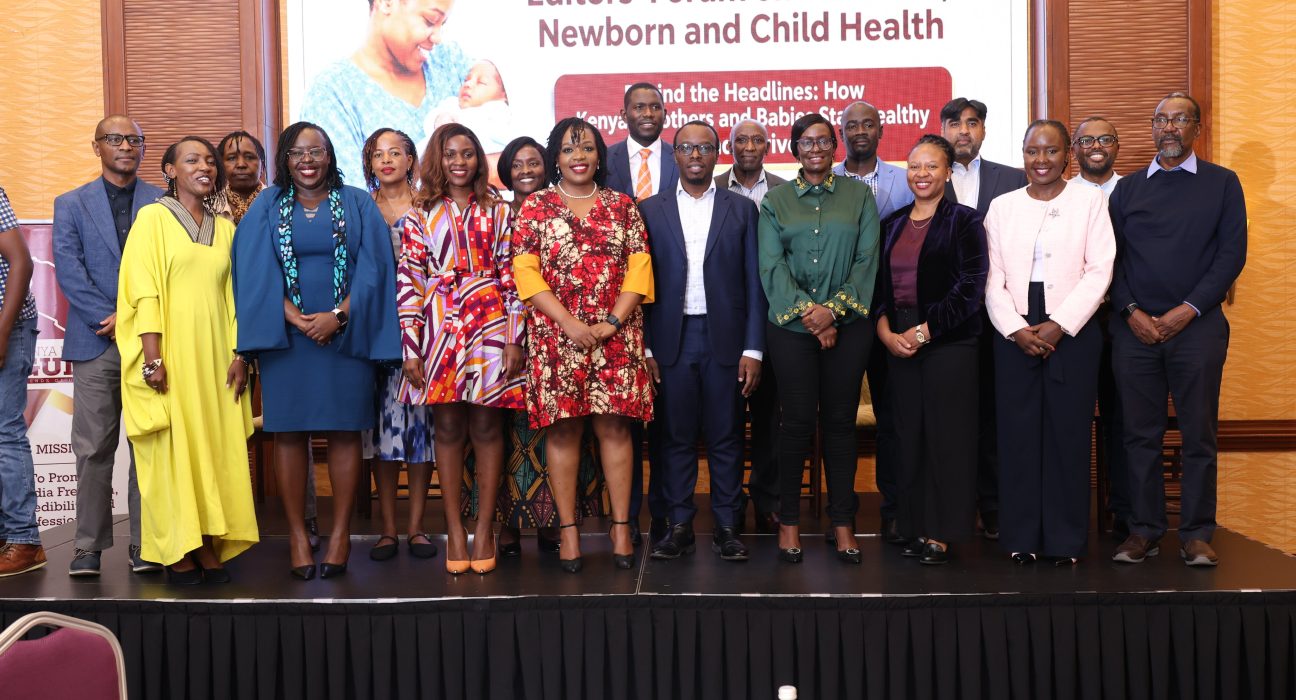
The forum examined the systems, partnerships, and investments needed to translate successful interventions into accessible, quality maternal, newborn, and child healthcare across Kenya.