

By Eddah Waithaka
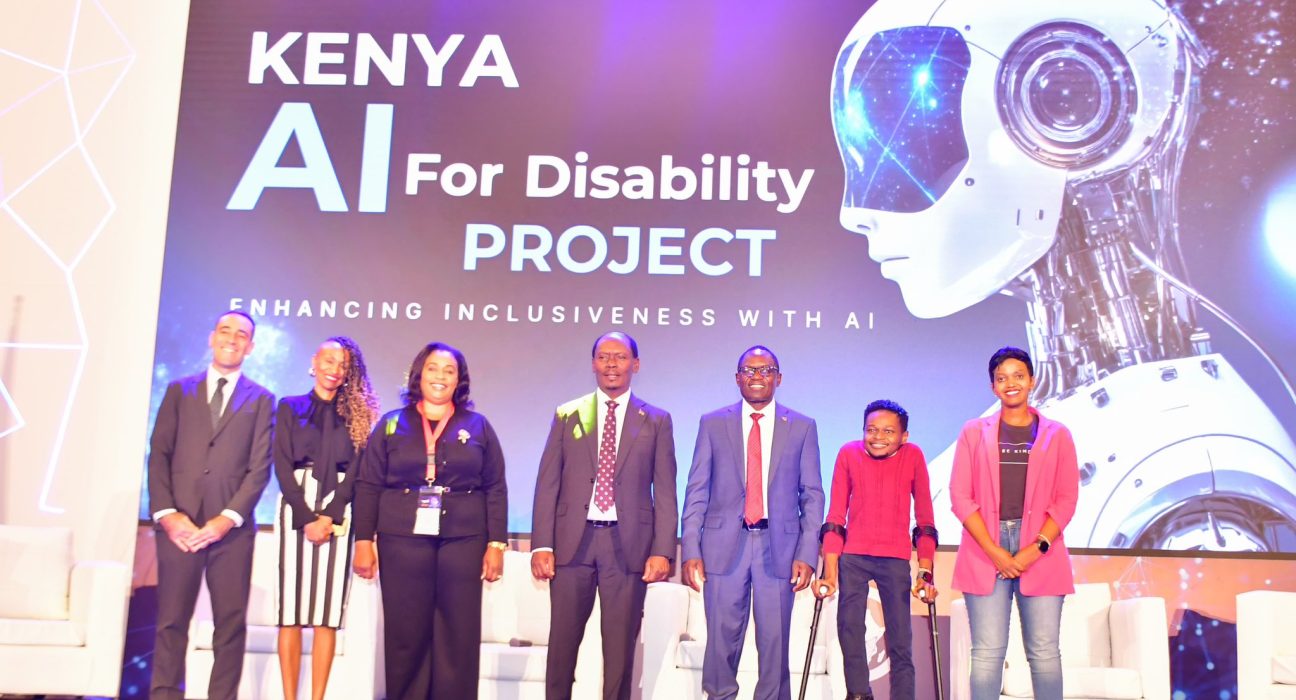
The Kenyan government officially launched the Kenya AI for Disability Project today, transforming inclusion from a policy aspiration into a core design principle for technology and infrastructure across the country.
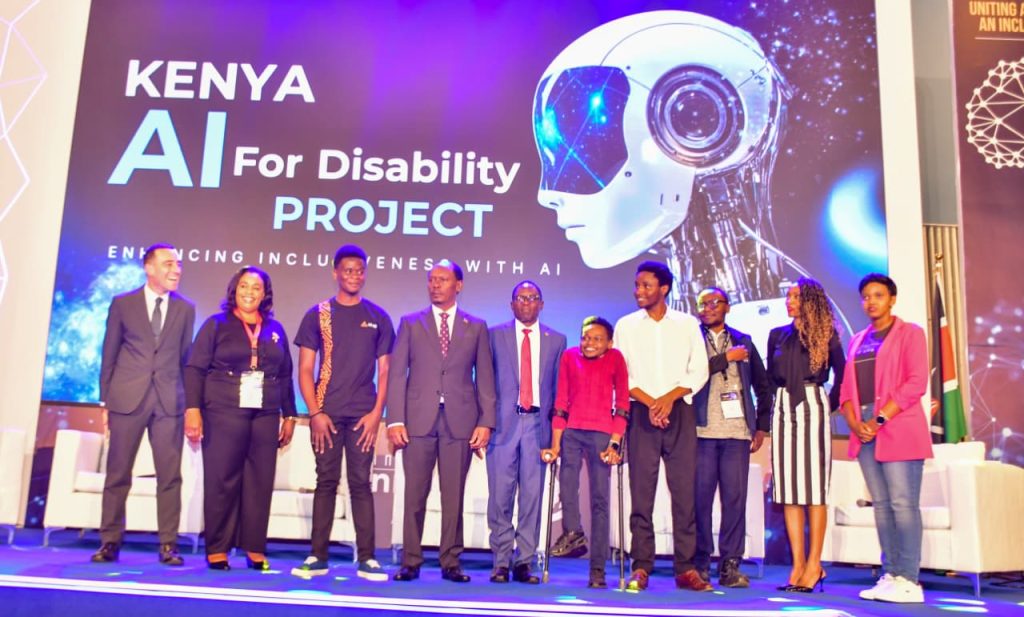
The Ministry of Information, Communications and the Digital Economy (MoICDE) unveiled the initiative during the closing ceremony of the Connected Africa Summit 2026 at the Edge Convention Centre in Nairobi.
Partners including the Kenya Institute of Special Education (KISE), Qhala, inABLE, the Assistive Technologies for Disability Trust (AT4D), and Huawei joined the government to spearhead the landmark effort.
“Africa must be at the table, not on the menu, in shaping solutions powered by emerging technologies,” declared Cabinet Secretary for Information, Communications and the Digital Economy, Hon. William Kabogo.
He urged African nations to move decisively from “Inclusion as Aspiration to Inclusion by Design.”
The project tackles real-world barriers that persons with disabilities face daily. Rather than retrofitting existing systems, the coalition co-designs scalable assistive technologies from the ground up.
“We are moving from commitments to delivery,” CS Kabogo added. He reaffirmed that the project demonstrates promises made during the Summit’s Ministerial Communiqué, particularly around inclusive digital skills, AI capacity building, and equitable access to digital infrastructure.
Secretary for ICT, E-Government and Digital Economy, Mary Kerema, underscored a structural shift in government’s approach. “As government, we are deliberately re-engineering our systems to be inclusive,” she said.
“We are embedding accessibility into our digital infrastructure, platforms, and services from the outset.”
The initiative anchors directly within Kenya’s national AI strategy and leverages key national assets, including the Konza Technopolis Data Centre and a growing network of digital hubs across the country.
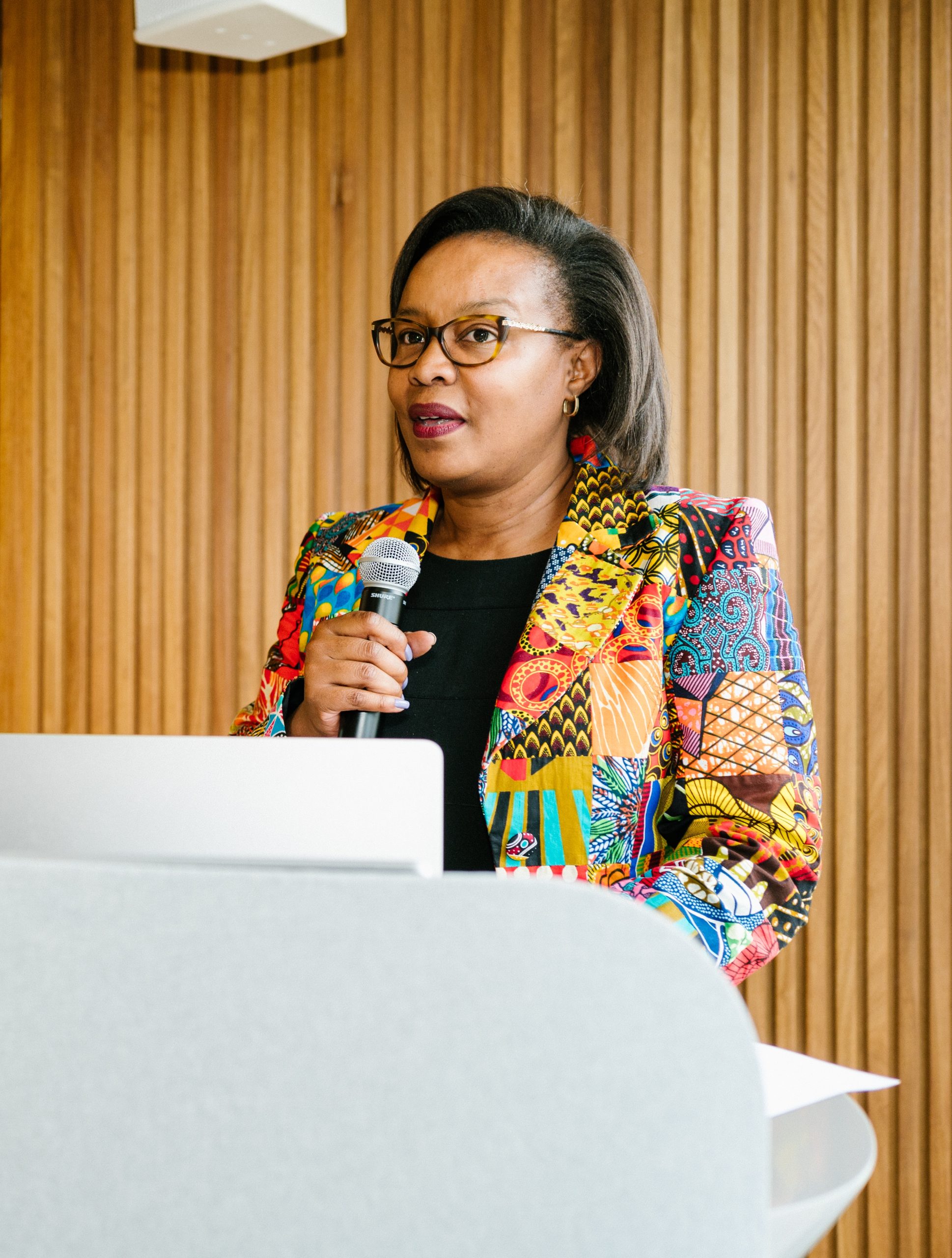
Irene Mbari-Kirika, Founder and Executive Director of inABLE, welcomed the partnership as a long-overdue solution. “For too long, persons with disabilities have been excluded from the digital economy not because of lack of ability, but because systems were not designed with them in mind,” she said.
“This initiative changes that reality by bringing co-creation, innovation, and accessibility together at scale.” She emphasized that inclusive technology unlocks untapped talent and productivity, making it an economic imperative, not just a rights issue.
The project mobilises a powerful coalition of expertise: KISE contributes disability inclusion research, inABLE and AT4D lead assistive technology innovation, Qhala drives AI development, and Huawei deploys critical infrastructure.
The launch directly reinforces key commitments from the Connected Africa Summit 2026 Ministerial Communiqué, adopted on 30th April 2026. These include accelerating digital skills and AI capacity for underserved communities, strengthening inclusive digital infrastructure, advancing a trusted digital ecosystem, and leveraging public-private partnerships to scale innovation.
The Communiqué previously underscored Africa’s ambition to build a single inclusive digital market. The AI for Disability Project now stands as one of the first flagship initiatives emerging from that vision, cementing Kenya’s leadership as a regional hub for accessible technology development.