

By Eddah Waithaka
Scientists and health experts launched two major policy documents today that lay out a clear roadmap. Vaccines stand as one of Kenya’s most powerful weapons against the growing threat of antimicrobial resistance (AMR), a crisis already claiming thousands of lives across the country.
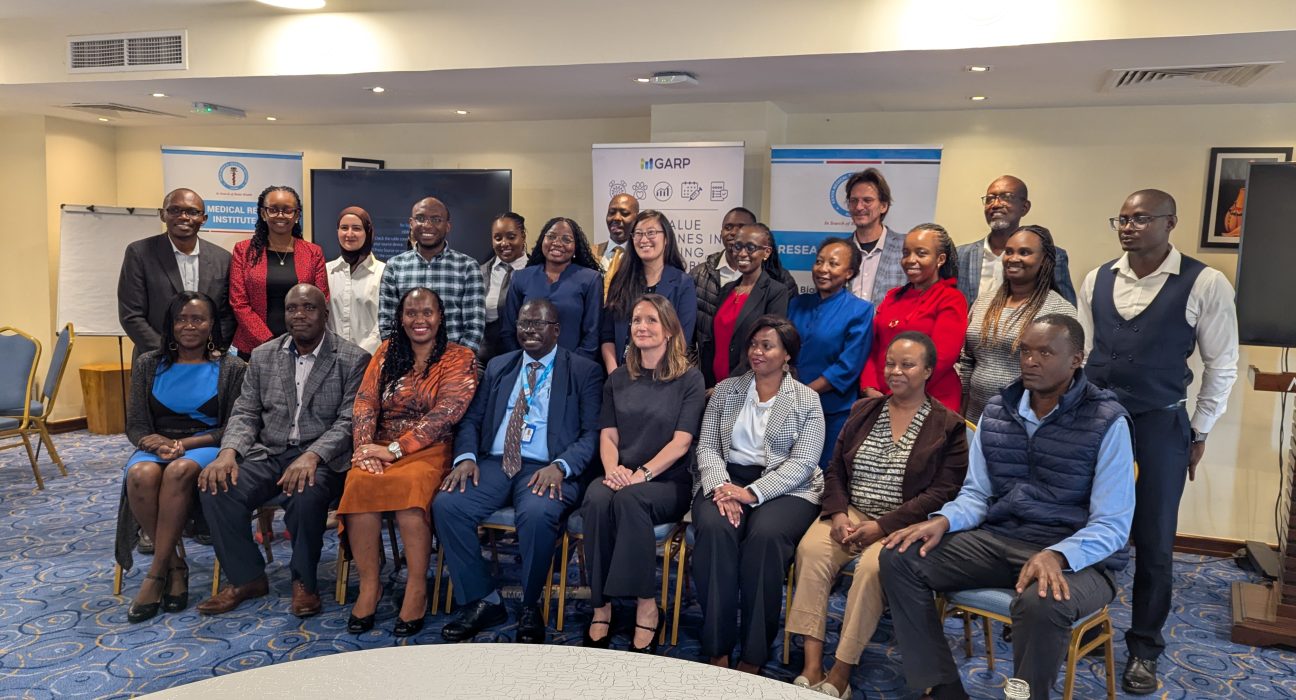
The Global Antibiotic Resistance Partnership (GARP) Technical Working Group, in collaboration with the Kenya Medical Research Institute (KEMRI) and the One Health Trust, unveiled a new report and policy brief titled The Value of Vaccines to Address Antibiotic Resistance in Kenya.
The documents detail precisely which vaccines Kenya must prioritize and expand to keep antibiotics effective and save lives.AMR occurs when bacteria, viruses, fungi, and parasites evolve and no longer respond to medicines designed to treat them.
In 2021, bacterial AMR contributed to more than one million deaths globally. In Kenya, the toll is already devastating: AMR contributed to 7,339 deaths in children under five, with 1,620 of those deaths directly attributable to resistant infections.
“Addressing AMR starts with preventing infections in the first place,” said Dr. Robert Onsare, Head of the Division of Enteric Pathogens & AMR Research at KEMRI and Chair of GARP-Kenya. “Vaccines stand out as a powerful, readily available tool that can be used in the short term.”
He added a stark warning, “For certain infections where resistance is widespread, vaccines may be the only effective way to save lives.” Kenya already holds proof that the strategy works.
After introducing the pneumococcal conjugate vaccine (PCV), infections caused by penicillin-resistant pneumococcal strains dropped dramatically, and invasive pneumococcal disease fell by more than 90% in children under five.
PCV vaccination is projected to prevent 14,329 deaths and 101,513 cases of pneumococcal disease from 2022 to 2032.Newer vaccines are already delivering results.
The typhoid conjugate vaccine (TCV), rolled out in July 2025 and now part of Kenya’s Expanded Programme on Immunization for children under 15, is predicted to avert 570,000 cases of antimicrobial-resistant typhoid, 4,674 deaths, and 243,000 disability-adjusted life years (DALYs).
Typhoid alone caused 753 deaths and took 56,807 DALYs in 2023.The malaria vaccine, currently under evaluation for nationwide rollout, already demonstrates its potential.
Among infants who received the vaccine between 2019 and 2021, hospital admissions for severe malaria dropped by 32%, and all-cause mortality fell by 9%.Vaccines fight AMR through three key mechanisms: they prevent infections outright, reduce the spread of drug-resistant germs, and slash the need for antibiotic treatments, slowing the evolutionary pressure that drives resistance.
Dr. Eric Muok, Acting Director of Research and Development at KEMRI, framed the launch as a milestone for Kenyan science.“One dream of a scientist is to do end-to-end research, being able to produce a designed product in the name of a policy brief that influences services and issues related to medical practice,” Muok said.
“We are privileged to host this today.”Muok struck a personal note about the broader public awareness campaign, referencing a popular local initiative. “It’s good that today, Eamad has become almost a household name,” he said.
“You talk to people out there and they tell you, it’s not good to take antibiotics for the sake of it. That is a very, very big step in the fight against the popularly known silent pandemic.”
The new policy brief lays out urgent recommendations for policymakers, urging them to increase coverage of existing vaccines in the immunization schedule, including the newly introduced typhoid conjugate vaccine, while including vaccines in insurance coverage to close persistent gaps in affordability and accessibility.
Policymakers must also close gaps in vaccine accessibility and distribution to achieve equitable health outcomes, ensuring that underserved communities do not remain invisible to the health system.
To build public trust, the brief calls on leaders to address vaccine hesitancy by engaging community stakeholders and religious leaders directly, recognizing that local credibility determines whether families accept immunization.
Strengthening cold-chain systems rounds out the recommendations, as reliable storage and transport ensure vaccines remain effective even when reaching the most remote populations where logistical challenges often threaten supply chains.
The working group stresses that human and animal vaccination must advance together under a One Health approach, recognizing the deep connection between human, animal, and environmental health.
This joint effort will prove crucial to stopping resistant germs from spreading between people and animals.
Muok emphasized that KEMRI is not merely advising from the sidelines but investing heavily in surveillance, lab upgrades, and the development of new vaccine candidates tailored to pathogens most notorious for driving AMR.
“By investing in vaccines, we are actually investing in the longevity of our current antibiotics,” Muok said. “When we prevent AMR, we reduce interaction between the population and antibiotics, and that also gives a longer life to the antibiotics themselves.”
He concluded with a direct appeal, “Let’s work together to ensure the value of vaccines is fully realized, and the fight for a healthier, resistance-free Kenya is achieved.”
The report calls on the government to develop a clear strategy for vaccine use as a central pillar of Kenya’s national AMR response, protecting public health now and securing the effectiveness of life-saving antibiotics for generations to come.