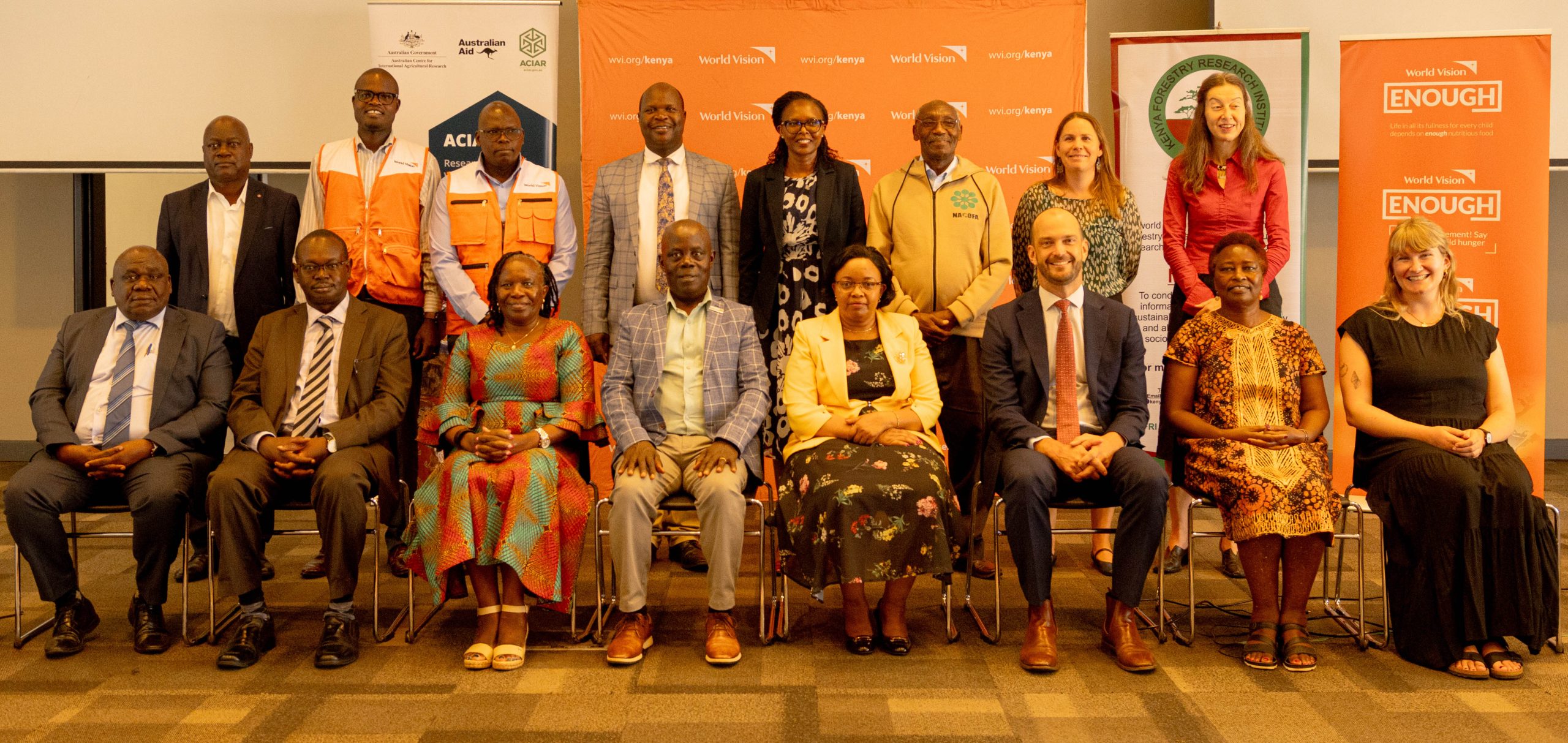



By Eddah Waithaka
The Kenyan government has launched two powerful new tools to accelerate its ambitious environmental goals. A national plan to integrate trees into farming and a first-of-its-kind system to track restoration progress across the country.
Presiding over the launch, Cabinet Secretary for Environment, Climate Change and Forestry, Dr. Deborah M. Barasa, declared the twin initiatives a “turning point” in Kenya’s restoration journey.
She stated the tools provide the strategic direction and accountability needed to meet critical national and global targets.
“With the Agroforestry Strategy and the Monitoring Framework, Kenya is contributing to the global call under the UN Decade on Ecosystem Restoration,” Dr. Barasa said.
“These instruments will guide farmers, counties, and partners in transforming our landscapes while improving livelihoods.”
The National Agroforestry Strategy (2025–2035)
Kenya’s new 10-year National Agroforestry Strategy launches an ambitious roadmap to mainstream tree-growing on farms and rangelands, setting bold, measurable goals that include establishing five million acres of agroforestry woodlots in drylands, modernizing the charcoal value chain to create sustainable youth-led enterprises, and directly fueling the national goal of achieving 30% tree cover by 2032.
The strategy positions agroforestry as a core solution for boosting food security, creating green jobs, and building climate resilience under the Bottom-Up Economic Transformation Agenda (BETA).
To ensure its ambitious restoration promises deliver tangible results, Kenya also launched a unified national Landscape and Ecosystem Restoration Monitoring Framework, a system that will actively monitor progress toward restoring 10.6 million hectares of degraded land by 2032, provide clear indicators for consistent national and county-level reporting, integrate gender equality and social inclusion into its core metrics, and align the country’s efforts with global commitments like the AFR100 initiative and the Bonn Challenge.
The Cabinet Secretary emphasized that success hinges on collective action. She called on county governments, the private sector, and development partners to integrate these frameworks into their plans and mobilize resources for widespread implementation.
“A strategy on paper does not plant a tree,” Dr. Barasa noted. “The task is to breathe life into these words. Together, we can make agroforestry a household practice and restoration a shared responsibility.”
The dual launch solidifies Kenya’s position as a leader in the global restoration movement, demonstrating a clear blueprint to turn environmental commitments into measurable benefits for both people and the planet.