

By Eddah Waithaka
At the 16th KEMRI Annual Conference, leaders unite to transform local research into made-in-Africa vaccines, aiming to end import dependency and secure health sovereignty.
Kenya’s top scientists, health officials, and global partners today launched a decisive national strategy for vaccine self-reliance, marking a pivotal shift from planning to action.
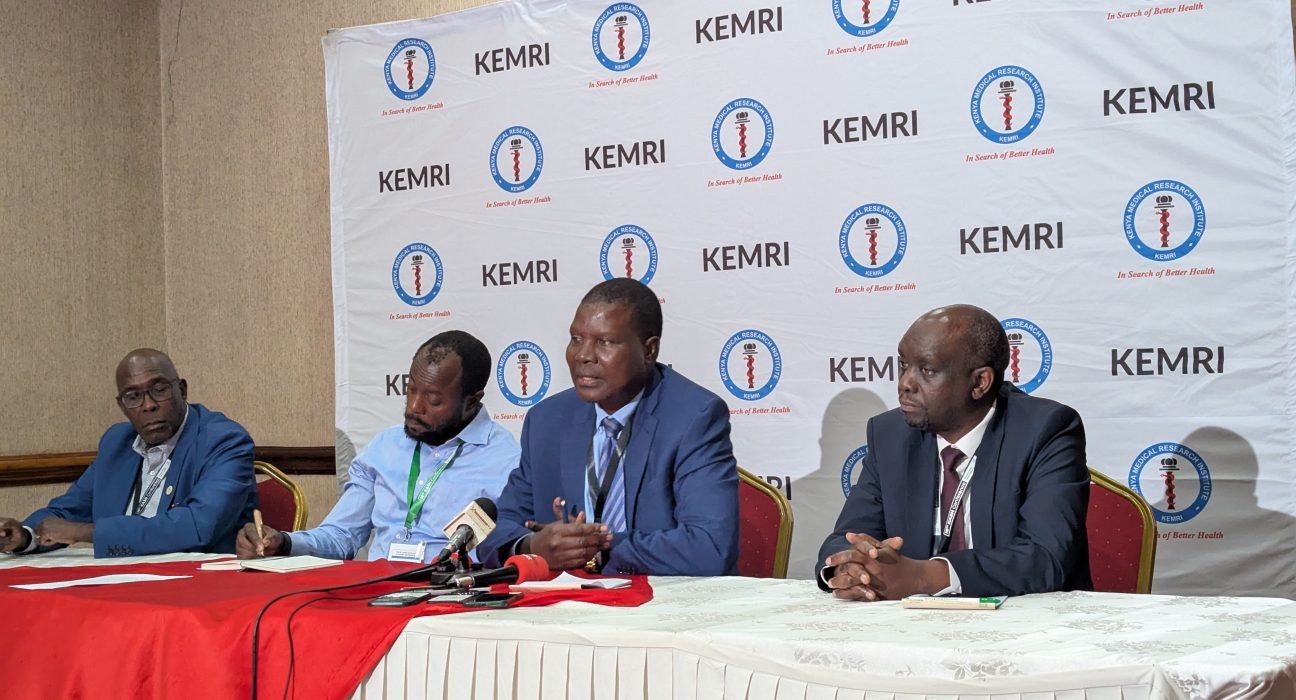
Cabinet Secretary for Health Hon. Adan Duale opened the 16th KEMRI Annual Scientific and Health Conference (KASH) this week, setting the stage for a dedicated pre-conference day focused entirely on building a sustainable local vaccine manufacturing ecosystem.
The move directly addresses the stark lessons of the COVID-19 pandemic. “Without African countries having vaccines, we will continue playing catch-up,” stated Prof. Elijah Songok, Director General of KEMRI. “We don’t know the next pandemic, but it will come. And if it will come, we have to be prepared.”
The strategy, unveiled in a series of high-level presentations, outlines a complete pathway from Kenyan labs to local vials.
KEMRI Lays the Scientific Foundation
Prof. Songok detailed KEMRI’s critical role, highlighting its advanced platforms for antigen discovery, genomics, and clinical trials.
“Our major aim is discovering vaccines specific to this particular country,” he said, emphasizing work on genotyping and pathogen surveillance to target regional health threats.
KEMRI’s partnerships, including with the new Kenya Biobank, provide the essential research bedrock for manufacturing.
BioVax Drives Industrial Scale-Up
Dr. Wesley Ronoh, CEO of the Kenya BioVax Institute, outlined the progress toward industrial production. “The Kenya Biobank provides that opportunity for the country. It is one of those great steps to increase capacity,” he said.
Dr. Ronoh’s presentation focused on building end-to-end production, securing technology transfers, and developing a skilled workforce to turn scientific discovery into tangible products.
Financing the Future of Health Security
A key hurdle is sustainable investment. Prof. Tom Kariuki, CEO of the Science for Africa Foundation, addressed this head-on. “The dependency on others is not going to go away, we need to discover vaccines here,” he asserted.
Prof. Kariuki called for strategic financing to de-risk manufacturing, train young scientists, and help researchers turn discoveries into viable businesses. “The market in Africa is huge. 1.4 billion people,” he noted, framing health innovation as a major economic opportunity.
Global Partnerships for Local Impact
Prof. Faith Osier of the International Vaccine Institute (IVI) reinforced the importance of global collaboration. With a new office in Kenya, IVI is deepening its work to strengthen Africa’s clinical trial and manufacturing ecosystems, ensuring local efforts meet international standards for quality and efficacy.
The unified message from the conference is clear: Kenya is no longer only aspiring to make vaccines, it is actively constructing the entire value chain.
By combining homegrown research, strategic manufacturing, smart financing, and global partnerships, the nation is building a resilient health shield for itself and positioning itself as a leader in African health security.