

By Eddah Waithaka
As artificial intelligence increasingly shapes how the world sees and represents people, TECNO and Brazilian visual artist Angélica Dass launch a bold two-year initiative today that asks a fundamental question: in an age of algorithms, who gets to define what it means to be human?
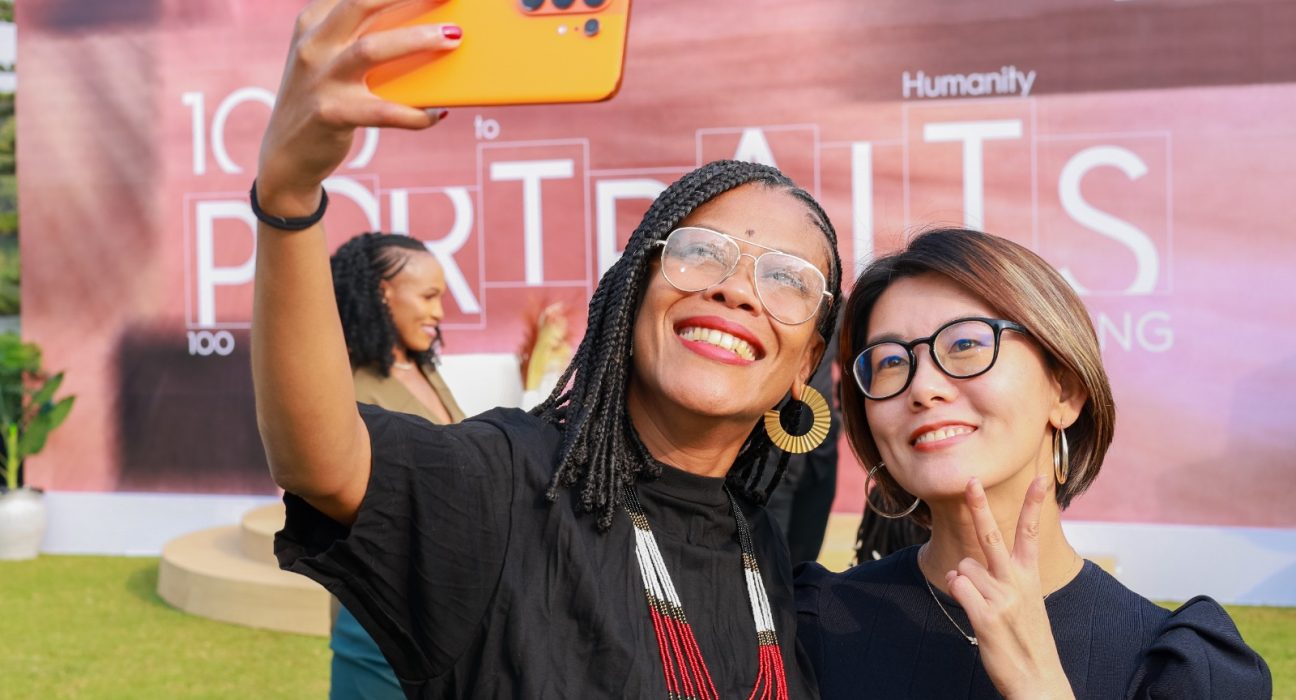
“100 Portraits of Becoming” begins in Nairobi and will span five countries across the globe, capturing 100 authentic portraits of individuals who refuse to be reduced to stereotypes. The initiative pairs TECNO’s inclusive imaging technology with Dass’s renowned human-centered approach to portraiture, creating what organizers call a “Living Archive” of human complexity.
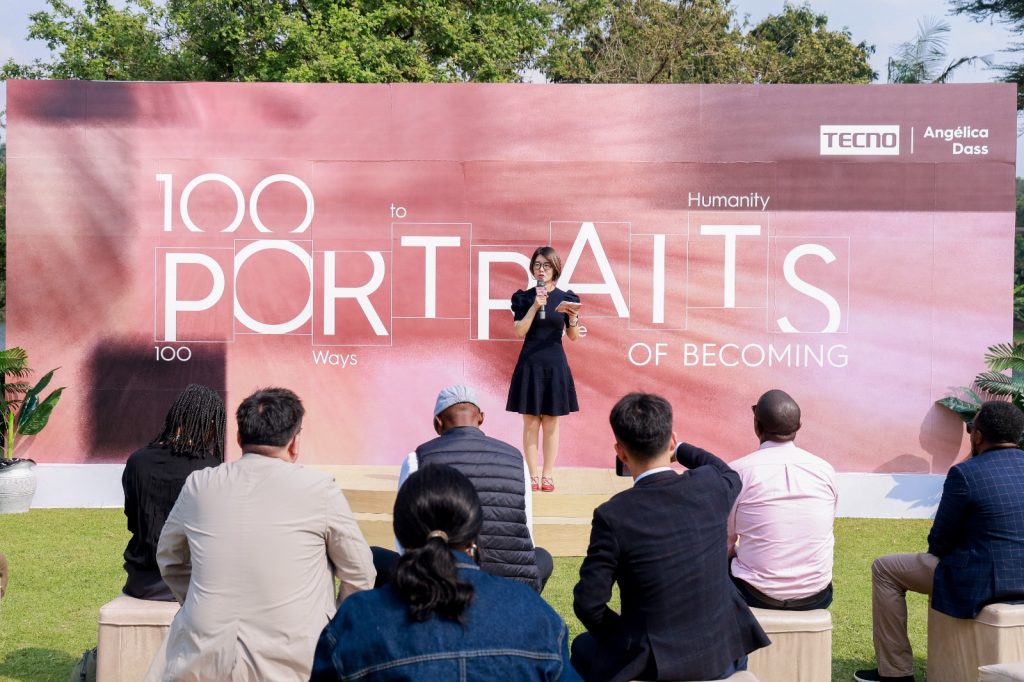
“Every image shapes assumptions, why it matters, who matters, and how people are understood,” said Jack Guo, General Manager at TECNO. “Through this project, we move beyond representation as technical accuracy alone and explore representation as recognition enabling technology not only to capture people faithfully, but to help people feel truly seen.”
For Dass, best known for her groundbreaking Humanæ portrait series that challenges conventional ideas of racial identity, the collaboration represents a natural evolution of her life’s work. The award-winning Brazilian-Spanish artist has spent years documenting how skin tones reflect unique cultures and individual identities rather than simplistic categories.
“As a photographer, I realize that I can be a channel for others to communicate,” Dass said. “This initiative creates such a channel for people to speak for themselves and be seen on their own terms. Being visible is not the same as being understood. True recognition begins when we are seen as we really are.”
The project launches in Kenya often called the “Silicon Savannah” for deliberate reasons. Home to one of the world’s youngest populations and a hub of technological innovation, Kenya challenges inherited narratives about where progress begins. Yet representation in global media and AI-generated imagery still lags behind reality.
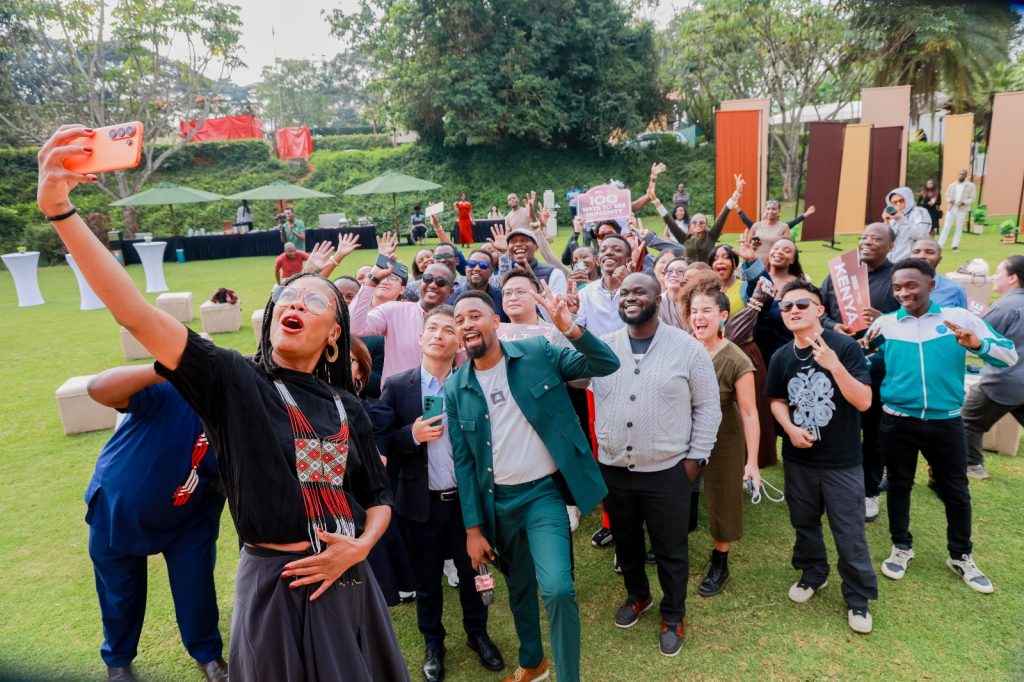
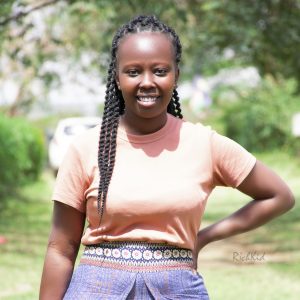
Participants in the inaugural Kenyan portraits include entrepreneurs, farmers, dancers, and artists whose lives resist single-narrative storytelling. They will be photographed in natural light without filters, wearing attire of their own choosing, and will share personal stories of growth and evolution.
“People are always quick to tell you what you are and where you fit,” said Alexander Odhiambo, a Kenyan participant and co-founder of Solutech Limited, an enterprise software company serving manufacturers across Africa. “I stopped waiting for that. The story that counts is the one I’m writing myself.”
The portraits will be captured on the TECNO CAMON 50 Ultra, powered by Universal Tone technology, the industry’s most advanced AI-powered full-spectrum skin tone imaging system. Launched in 2023, Universal Tone integrates a multi-skin-tone color card featuring 372 skin tones, addressing a historic blind spot in mobile photography where people with non-fair skin tones have too often been misrepresented.

Historically, mainstream AI models and imaging algorithms have been trained on datasets conforming to narrow aesthetic standards, leaving them unable to reflect humanity’s full diversity. This project aims to correct that oversight, ensuring each subject is represented with the dignity and truthfulness the initiative demands.
The “Living Archive” website will feature portraits and narratives from all five countries, sustaining what organizers hope will become a global cultural conversation about dignity, identity, and human becoming in the age of AI.
Dass’s impact has long resonated beyond traditional gallery spaces. Her 2016 TED Talk on skin and identity has reached over two million viewers, and her work has appeared at the World Economic Forum, UNESCO, the Migration Museum in London, and the Montreal Museum of Fine Arts, as well as in National Geographic, TIME, and Foreign Affairs.
“What moved me about this collaboration is the shared vision and the possibility of bringing that intention into a medium used by millions every day,” Dass said. “This initiative is not about defining people it is about allowing identity to remain open, layered, and human.”
The first portraits and stories go live online in early August, marking the start of the full campaign rollout. From Nairobi, “100 Portraits of Becoming” travels to the Philippines, Saudi Arabia, Türkiye, and Brazil over the next two years offering one hundred ways to see humanity, one story at a time.