

By Eddah Waithaka
Wawira Njiru’s Food4Education transforms school meals from charity into economic infrastructure, feeding 660,000 children daily
Kenyan social innovator Wawira Njiru has won the German Africa Prize 2026 for transforming school feeding programs into engines of economic development across the continent.
The German Africa Foundation awarded the prize to Njiru for her groundbreaking work through Food4Education (F4E), a social enterprise she founded in 2014 that now serves more than 200 million meals to 660,000 children at 1,900 Kenyan schools.
“Wawira Njiru demonstrates that school feeding can be much more than simply providing meals,” said Claus Stäcker, President of the Prize Jury and Director of Africa Programmes at Deutsche Welle. “With Food4Education, she has created a system that reaches children, involves families and strengthens local economic cycles. Her idea and her commitment have led to an African solution to a global challenge.”
Unlike traditional aid-dependent models, F4E builds school feeding as locally rooted systems sustained by shared investment. Families contribute through the digital Tap2Eat platform using wearable NFC wristbands or cards, while government funding and philanthropic partnerships secure long-term sustainability.
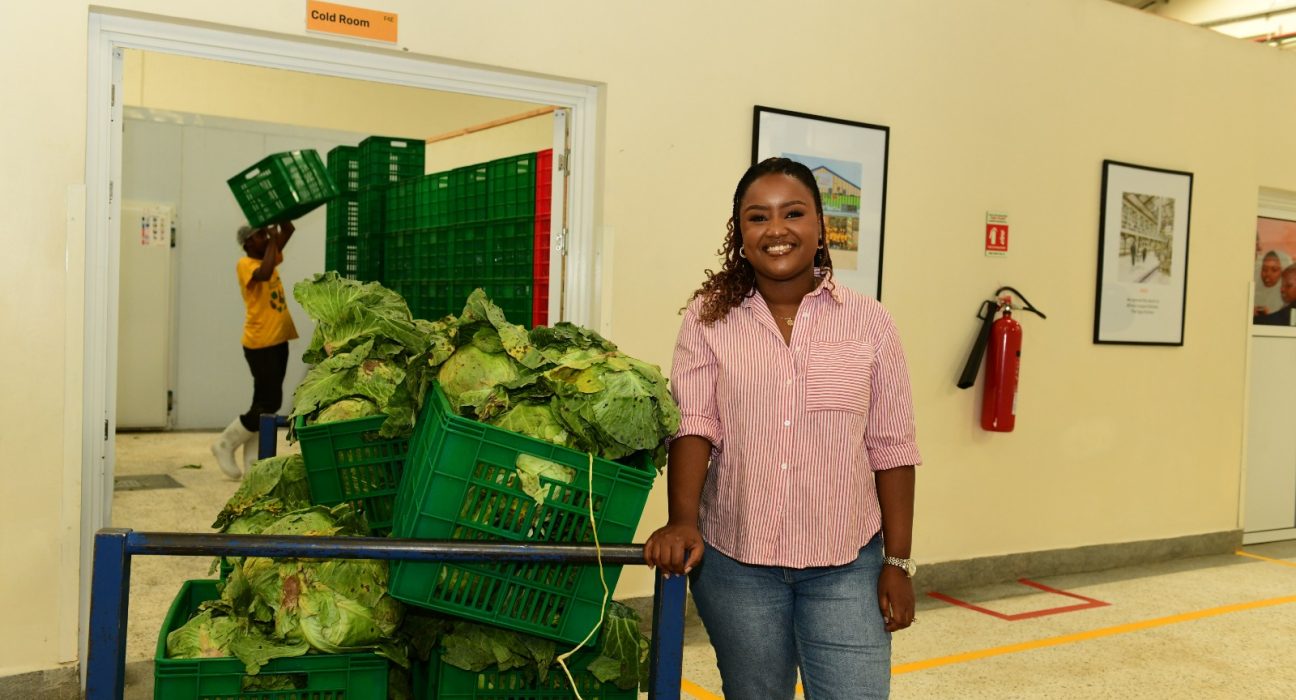
The approach keeps costs remarkably low roughly 30 cents per nutritious meal with food waste held under two percent. The organization operates multiple kitchens, including the solar- and steam-powered Giga Kitchen in Nairobi, where precise digital planning manages procurement, production and distribution.
Njiru, who started by feeding just 25 schoolchildren, now leads an organization that employs more than 6,000 people, predominantly women and young people in their first formal employment. They work as kitchen managers, food-safety scientists, logistics specialists, and software engineers.
“For too long, school feeding was treated as charity,” Njiru said. “We have proven it is economic infrastructure. What we have built in Kenya shows what is possible when African solutions are designed around our own realities and built to work at scale.”
About 80 percent of F4E’s food comes from local smallholder farmers, providing them a reliable buyer for their produce and strengthening local value chains. The model’s success has drawn attention beyond Kenya, with F4E now sharing its expertise with African governments, including a partnership in Zambia to strengthen their nationally led school feeding system.
The German Africa Prize, awarded since 1993, honors outstanding individuals from African countries who make exceptional contributions to democracy, peace, sustainable development, and human rights. The award ceremony will take place November 4 at the Allianz Forum in Berlin, presented by Federal Minister for Economic Cooperation and Development Reem Alabali Radovan.
Njiru acknowledged the broader significance of the recognition: “African governments are no longer asking us how many children we can feed. They are asking how many jobs we can create, how many farmers we can connect to markets, and how much of their own budget is reinvested in local communities. That is the shift this prize recognizes: Africa is building a school feeding economy, and F4E is accelerating it.”